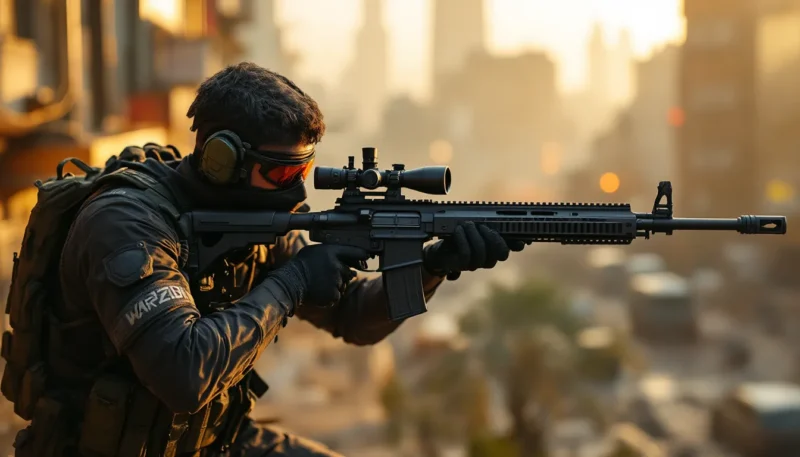
Vondel hasn’t just survived the Warzone map rotation, it’s thrived. Since its introduction in Season 04 of Call of Duty: Modern Warfare II Warzone, this compact Dutch-inspired battleground has become a favorite for players who crave intense urban combat without the sprawl of Al Mazrah or the verticality overload of Ashika Island. In 2026, Vondel remains a staple in the Resurgence playlist and occasionally appears in Battle Royale modes, offering a unique blend of tight CQB encounters and strategic positioning opportunities.
What makes Vondel distinct is its layered design: canals cutting through city blocks, a mix of historical and modern architecture, and enough rooftop access to make every engagement three-dimensional. Whether you’re grinding for wins or practicing movement mechanics, understanding Vondel’s geography and flow separates players who get third-partied from those who control the map. This guide breaks down everything from optimal drop zones to endgame circle tactics, giving you the edge needed to consistently dominate lobbies on this iconic European battleground.
Key Takeaways
- Vondel Warzone rewards strategic rotations and vertical awareness over raw gunfight mechanics, making map knowledge essential for consistent wins.
- Master early-game positioning by landing at high-tier loot locations like Museum District and Central Station for aggressive plays, or safer zones like Zoo and Residential Blocks for survival strategies.
- Control the third dimension by utilizing rooftops, ziplines, underground tunnels, and building interiors—ignoring vertical threats is the most common mistake on Vondel.
- Adapt your loadout based on circle location: use SMGs for urban close-quarters combat and switch to ARs or snipers if final circles pull toward open areas like Park or Harbor.
- Avoid common pitfalls including over-committing to hot drops, poor gas rotation timing, fighting in streets without cover, and static positioning in final circles—awareness prevents more deaths than aim alone.
- Use efficient movement through building interiors and zipline chains rather than streets; strategic vehicle use and tunnel flanks provide decisive positioning advantages against predictable enemy rotations.
What Is Vondel in Warzone?
Vondel is a medium-sized Warzone map set in a fictionalized version of Amsterdam, featuring canals, historic architecture, modern shopping districts, and cultural landmarks like a zoo and museum. Released as part of the Season 04 update for MW2 Warzone, it was designed to fill the gap between massive Battle Royale maps and smaller Resurgence arenas.
The map supports both traditional BR and Resurgence modes, though it’s most commonly found in Resurgence playlists where the faster pace complements Vondel’s design. With around 40-50 squads dropping in typical Resurgence matches, the action stays hot from landing through final circle.
Map Overview and Key Features
Vondel spans approximately 1.5 square kilometers, making it larger than Rebirth Island but significantly more compact than Al Mazrah or Urzikstan. The map is divided into distinct zones: dense urban blocks with multi-story buildings, open parklands, waterway systems, and industrial sectors.
Key features include:
- Extensive vertical gameplay: Nearly every major POI has rooftop access, requiring constant awareness of elevation threats
- Water canal network: Multiple waterways connect different map sections, offering both traversal routes and dangerous exposure zones
- Interior complexity: Buildings feature multi-room layouts with destructible elements and multiple entry points
- Zipline infrastructure: Well-placed ziplines enable quick rotations between key buildings and across dangerous open areas
- Vehicle-accessible streets: Wide boulevards allow for vehicle rotation, though tight corners and canal bridges create natural choke points
The map’s visual design leans heavily into Dutch architectural motifs, brick townhouses with large windows, modern glass storefronts, green parks, and industrial waterfront areas. This aesthetic isn’t just for show: the varied building types create distinct combat scenarios depending on where fights break out.
Vondel’s Unique Place in Warzone’s Map Rotation
Vondel occupies a sweet spot in Warzone’s ecosystem. It’s not as claustrophobic as Fortune’s Keep or as sprawling as Urzikstan, making it ideal for squads that want fast-paced action without constant third-parties every fifteen seconds.
In the current 2026 rotation, Vondel appears primarily in:
- Resurgence Quads and Trios: The most common playlist, where respawns keep pressure constant
- Limited-time BR modes: Occasionally featured in standard Battle Royale with modified circle settings
- Ranked Resurgence: Part of the competitive ladder during specific seasons
The map rewards game sense over pure gunfight mechanics. Yes, you need to win your ones, but knowing when to rotate, which buildings to avoid, and how to read circle pulls matters more here than on flatter maps. Players who master Vondel’s flow can apply those skills across other urban-focused maps, making it an excellent training ground for improving overall Warzone fundamentals.
Best Landing Spots and Hot Zones in Vondel
Your landing spot determines the entire early game. Drop smart, get kitted fast, and you’ll enter mid-game with momentum. Drop poorly, and you’re scrambling for a pistol while an SMG shreds you.
High-Tier Loot Locations for Aggressive Players
If you’re hunting kills and confident in early-game gunfights, these spots offer premium loot density but attract multiple squads:
Museum District – The crown jewel for loot. Multiple legendary and epic loot spawns across three floors, but expect 3-5 teams landing here in hot lobbies. The Museum’s central location makes it a natural battleground. Control the second floor exhibition halls for superiority over ground-floor rushers.
Central Station – High ground advantage with excellent loot concentration. The station’s main hall contains numerous supply crates and floor loot, while the platforms below offer escape routes via the underground tunnels. The downside? Everyone knows it’s good, so first-circle fights here are guaranteed.
Shopping District (Castle Square area) – Dense urban combat with shops, alleyways, and rooftop access. Loot quality matches the chaos, expect purple and orange weapons if you survive the initial brawl. The interconnected buildings let skilled players chain kills while rotating between threats.
Cruise Terminal – Often overlooked but consistently strong. The terminal building and docked ship contain quality loot with slightly less competition than Museum or Station. The nearby warehouses provide backup looting if the terminal is contested.
For squads running aggressive strategies in competitive matches, Museum and Central Station offer the best risk-reward ratio. You’ll fight, but winning those fights sets you up with cash, loadouts, and map control.
Safe Drop Zones for Survival-Focused Gameplay
Not every match needs to start with a 4v4v4 dogfight. These locations offer solid loot with lower immediate pressure:
Zoo (northern section) – Spread-out buildings with decent loot density and natural cover from the animal enclosures. You’ll typically face one competing squad maximum. The downside is rotation difficulty: the Zoo sits on the map’s edge, so bad circle RNG forces long, exposed rotations.
Park and Botanical Gardens – Open areas with scattered buildings and loot containers. Good for squads that want breathing room to loot, complete contracts, and position for first circle. The openness cuts both ways, you see threats coming, but there’s limited hard cover.
Residential Blocks (eastern suburbs) – Multiple townhouses with guaranteed floor loot and occasional supply crates. Perfect for splitting up, looting fast, then regrouping. The uniform building layouts mean experienced players can clear these areas efficiently without wasting time.
Harbor Industrial Area – Warehouses and shipping containers provide cover and moderate loot. Often ignored in favor of flashier POIs, making it ideal for building cash through contracts before rotating into mid-game with a loadout advantage.
Survival drops work well in ranked or when practicing late-game fundamentals. You sacrifice early KP for guaranteed loadouts and better positioning entering critical circles.
Navigating Vondel’s Complex Terrain and Verticality
Vondel punishes players who ignore the third dimension. Every street has multiple overlook positions, and tunnel vision on ground-level threats will get you dropped from above.
Mastering Rooftop Engagements and Building Combat
Rooftop control is everything in Vondel’s urban core. Most buildings feature accessible roofs via:
- External staircases on rear or side facades
- Interior stairwells leading to roof access doors
- Ziplines connecting adjacent buildings
- Mantleable ledges from upper windows
When taking rooftop positions:
- Check adjacent roofs first – Assume someone’s already up there. Pre-aim common headglitches before committing to a position.
- Don’t skyline yourself – Stay near AC units, chimneys, or roof edges. Standing in the middle makes you visible from every angle.
- Plan your exit – Know at least two ways down before you need them. Getting trapped on a roof during a push is a death sentence.
- Mind the killcam – If you down someone from a roof, their teammates know exactly where you are. Reposition or prepare for the counter-push.
Building interiors require different tactics. Vondel’s buildings favor:
- Claymores/Proxies on staircases – Slows pushes and provides audio cues
- Holding second-floor windows – Overlook street approaches while maintaining escape routes upward
- Room-clearing discipline – Check corners, listen for footsteps, and don’t sprint into unknown spaces
Many of Vondel’s buildings connect internally through shared walls or courtyards. Players familiar with these connections can flank entire squads by using unexpected entry points. Spend time in Private Matches learning which buildings connect and where the breach points exist.
Utilizing Water Canals and Underground Passages
The canal system divides Vondel into distinct zones. Canals offer:
- Fast rotation paths – Swimming is slower than sprinting but avoids street-level engagements
- High risk, high reward crossings – Bridges become natural choke points: crossing canals mid-fight is usually suicide
- Limited cover – You’re extremely vulnerable while swimming: only use canals when you’re certain no teams are watching
Some players report positive experiences with competitive gaming guides when learning water-based rotation timings for ranked play.
Underground passages connect several major POIs, including Central Station, Museum District, and sections of the Shopping District. These tunnels are:
- Dark and acoustically deceptive – Audio cues bounce unpredictably: don’t trust directional sound completely
- Limited sightlines – SMGs and shotguns dominate: ARs and snipers are liabilities
- Two-way traffic – Teams rotate through tunnels constantly: never assume you’re alone down there
- Gas refuge – Underground sections can provide temporary gas protection during rotations, though you’ll still take damage
Pro tip: Some tunnel sections have maintenance rooms and side passages that most players ignore. These spots are excellent for letting pursuing teams pass, then attacking from behind. Mark these on your mental map through repeated play.
Optimal Loadouts and Weapon Choices for Vondel
Vondel’s combat ranges vary dramatically based on POI and circle location. Your loadout needs flexibility or you’ll excel in one scenario and fold in another.
Close-Quarters Loadouts for Urban Combat
When fighting inside buildings, through Shopping District alleys, or in the Museum’s tight corridors, these setups dominate:
Primary: SMG (Meta-Dependent)
As of early 2026, top SMG choices include:
- WSP-9 – Still competitive after multiple balance passes. Fast TTK within 15m, controllable recoil, excellent mobility.
- Superi 46 – Hipfire laser with the right attachments. Dominates sub-10m engagements but struggles beyond that.
- ISO 45 – Sleeper pick with great damage range for an SMG. Slightly slower handling than WSP-9 but more forgiving at 15-20m.
Secondary: Shotgun or Pistol
- Lockwood 300 – One-shot potential within 8m if built correctly. High risk, high reward.
- Renetti (full-auto conversion) – Excellent backup when your SMG runs dry mid-fight. Faster swap than reloading.
Perks:
- Double Time – Extended Tac Sprint for aggressive pushes and quick repositioning
- Fast Hands – Faster reloads and weapon swaps save lives in building fights
- Tempered – Two plates for full armor is crucial when constantly taking damage
- High Alert / Ghost – High Alert for early-game awareness: swap to Ghost after first loadout
Equipment:
- Stun or Flash Grenades – Essential for pushing buildings and clearing rooms
- Semtex or Frag – Lethal versatility: Semtex for sticking campers, Frags for bouncing into rooms
This loadout excels from Landing through mid-game urban rotations. Many players reference loadout builds when optimizing attachment combinations for specific engagement ranges. If final circles pull toward open areas like the Park or Harbor, you’ll want a secondary loadout ready.
Long-Range Setups for Open Areas
Late circles occasionally pull to Zoo, Park, or Harbor, zones with 50m+ sightlines where SMGs become liabilities.
Primary: AR or LMG
- SVA 545 – Current AR meta favorite. Clean iron sights, minimal recoil, competitive TTK out to 60m.
- MCW – Jack-of-all-trades. Not the fastest TTK but extremely easy to control at range.
- Pulemyot 762 – LMG option for sustained fire. Dominates headglitches and can pressure multiple enemies without reloading. Mobility suffers, so only viable in stationary endgames.
Secondary: Sniper or Marksman Rifle
- XRK Stalker – One-shot headshot capability, handles better than heavier snipers.
- KVD Enforcer – Marksman alternative with faster follow-up shots, though requires two shots for downs.
Perks:
Same core setup as CQB (Double Time, Fast Hands, Tempered) but consider:
- Focus – Reduces flinch when scoped: critical for winning sniper duels
- Bird’s-Eye (if running Advanced UAV) – Shows enemy direction on minimap, massive advantage in open-area positioning
Equipment:
- Smoke Grenades – Essential for crossing open ground during rotations
- Snapshot Grenades – Intel gathering before pushing buildings on map edges
The ideal approach? Run a hybrid: SMG + AR in one loadout, grab a second loadout late-game if circles favor range. Trying to force an SMG in Zoo’s final circle or an LMG in Museum District will cost you wins.
Strategic Rotations and Circle Management
Good aim wins fights. Good rotations win matches. Vondel’s layout creates predictable traffic patterns once you understand them.
Early Game Rotation Strategies
After landing and securing initial loot, your first rotation should accomplish:
- Positioning inside first circle – Avoid last-second sprints through gas
- Contract completion – Scavengers for loot, Recons for circle intel, Bounties for aggressive squads
- Loadout acquisition – $10,000 cash or finding a loadout drop
First circle typically pulls toward map center – Museum, Central Station, or Shopping District. If you land edge (Zoo, Harbor), identify your rotation path immediately:
- From Zoo: Move south through Park toward Museum or Shopping District. Avoid open canal crossings: use bridge choke points cautiously.
- From Harbor: Rotate inland through Industrial Area or along waterfront toward Cruise Terminal. Watch for teams holding warehouse high ground.
- From Suburbs: Push west toward Shopping District or Central Station. Use alleyways and building interiors to avoid street exposure.
Mid-rotation contracts: Recon contracts are undervalued in Resurgence. Knowing second and third circle locations lets you pre-position in power buildings before other teams realize they need to rotate. This information advantage often determines endgame outcomes.
Endgame Positioning and Final Circle Tactics
Fourth and fifth circles separate good teams from great ones. By this point:
- Loadouts are distributed
- Team counts are down to 8-12 squads in Resurgence
- Gas damage is severe enough that bad positioning equals instant death
Priority targets for final positioning:
Central buildings with vertical control – If circle centers on Shopping District or Museum, control the tallest building with 360-degree sightlines. Force other teams to push you or die to gas.
Circle edge power positions – Contrary to instinct, edge positions work well in final circles if you have:
- Hard cover (concrete walls, not wood)
- Clear sightlines into circle center
- Escape route if gas forces movement
The edge position lets you third-party teams fighting for center while maintaining gas as a “wall” protecting one side.
Vehicle considerations – Trophy Systems are mandatory in final circles. If you’re vehicle-rotating, the driver needs to:
- Drift around corners to avoid being stationary targets
- Drop teammates near cover, not in open streets
- Abandon vehicle before it becomes a death trap
Final circle chaos management:
When the circle shrinks to building-size:
- Identify enemy positions – Use UAVs, audio cues, and recent killcams
- Force enemy movement first – If you have position, make them push through gas or your lines of fire
- Watch for desperate plays – Teams with nothing to lose will make high-risk pushes: be ready
- Conserve plates – Plating mid-gunfight in final circles is often fatal: position to minimize damage taken
In Resurgence, respawns disable during final circles. This removes the safety net and makes deaths permanent, play accordingly.
Points of Interest (POIs) Breakdown
Each major POI on Vondel has distinct characteristics that dictate how fights unfold and what strategies work.
Museum District
Location: Central-west, bordering canal system
Loot Quality: S-tier (Legendary/Epic heavy)
Traffic: Extreme, expect 3-5 squads on hot drops
The Museum is Vondel’s Super Store equivalent. Multi-floor layout with:
- Ground floor galleries – Long sightlines between exhibits, dangerous without clearing corners
- Second floor exhibition halls – Overlook ground floor: dominant position but exposed to third-floor threats
- Third floor and rooftop – Ultimate high ground, but only two stairwell accesses make it defensible or trapworthy depending on whether you’re up there first
- Basement archives – Connect to underground tunnel system: excellent escape route or flank path
Best practices:
- Land roof or third floor to fight downward
- Control stairwells: don’t let teams free-rotate between floors
- Exit before mid-game unless circle favors it: staying too long attracts endless third-parties
Central Station and Shopping District
Location: Map center-east
Loot Quality: A-tier (consistent Epic/Rare)
Traffic: High throughout match due to central location
Central Station features:
- Main terminal hall – High ceilings, multiple entry points, excellent for teams with coordination
- Platform levels – Below main hall, offer cover but limited escape options
- Office annexes – Side buildings with quality loot, often ignored during hot drops
- Rooftop access – Overlooks Shopping District and provides strong rotation positions
Shopping District (Castle Square and surrounding blocks):
- Retail storefronts – Tight interiors with destructible elements
- Outdoor cafes and squares – Death traps with minimal cover: avoid lingering
- Multi-story apartments – Above retail level, provide firing positions into streets
- Alleyway networks – Connect buildings and enable flanks
The Station-Shopping District area rarely escapes circle coverage. Mastering this zone’s building layouts and rotation paths is essential for consistent Vondel performance. Recent coverage from esports news has highlighted how professional teams prioritize this area in competitive Resurgence tournaments.
Combat tips:
- Use ziplines between Station roof and Shopping District buildings for rapid repositioning
- Don’t commit to street fights: always fight from buildings when possible
- Cash registers in shops provide quick money for loadouts
Zoo and Park Areas
Location: North-northeast map edge
Loot Quality: B-tier (decent spread, not concentrated)
Traffic: Low to medium: increases if circle pulls north
Zoo sections include:
- Animal enclosures – Provide natural cover, scattered loot containers
- Main pavilion building – Central structure with moderate loot, overlooks enclosure areas
- Service roads and maintenance buildings – Often contain vehicles and cash registers
- Viewing platforms – Elevated positions good for holding angles
Park (west of Zoo):
- Open green spaces – Minimal cover, avoid crossing during mid-game
- Botanical greenhouse – Glass structure with good loot but extremely exposed
- Walking paths and bridges – Predictable movement lanes: easy to hold or ambush
Zoo/Park works well for:
- Relaxed early game with minimal pressure
- Vehicle rotations via service roads
- Late-game if circle favors it (rare but possible)
Weaknesses:
- Edge position forces long rotations on bad circles
- Limited vertical gameplay compared to urban zones
- Few hard cover options in Park sections
If you land Zoo and circle pulls south toward Museum, rotate early and decisively. Waiting too long leaves you stuck in gas or forced through bottlenecks where teams are pre-aimed.
Advanced Tips and Tactics for Vondel Mastery
Once you’ve got the basics down, these advanced tactics separate competent players from dominant ones.
Flanking Routes and Ambush Points
Underground tunnel flanks: Most teams expect threats from street level or rooftops. Using tunnel systems to emerge behind enemy positions catches teams off-guard. Key tunnel routes:
- Museum basement to Central Station underground
- Shopping District subterranean passages connecting eastern and western blocks
- Harbor service tunnels to Industrial Area
When using tunnels:
- Clear entry and exit before committing your squad
- One player watches the rear to prevent getting sandwiched
- Use Snapshot grenades before emerging topside
Rooftop flanks via ziplines: Several rooftop ziplines connect buildings that appear separated at street level. Teams focused on ground-level approaches won’t expect attacks from connected roofs. Notable zipline connections:
- Shopping District to Central Station rooftop
- Museum annex buildings to main Museum roof
- Harbor crane ziplines to warehouse rooftops
Water-based flanks: While risky, swimming through canals lets you approach POIs from unexpected angles. Best used:
- When teams are distracted by gunfights
- During gas rotations when everyone assumes you’re running from gas, not swimming perpendicular to it
- For sneaky revives on downed teammates who fell near water
Ambush points:
Set up in these high-percentage spots when you hear teams rotating:
- Bridge approaches: Limited crossing points over canals create natural ambush zones
- Stairwell tops: Hold from above with equipment blocking access
- Building corners near Buy Stations: Teams focused on purchasing are vulnerable
- Gas edge during rotations: Position just inside safe zone where late-rotating teams will appear
Vehicle Usage and Movement Efficiency
Vehicles on Vondel are tactical tools, not primary transportation. The map’s compact size and dense urban core make vehicles situational.
When vehicles work:
- Early-game rotations from edge spawns (Zoo, Harbor) to circle
- Emergency gas escapes when caught out of position
- Late-game repositioning between final circles (if roads are available)
- Aggressive pushes on isolated teams in open areas
When to avoid vehicles:
- Urban cores (Shopping District, Museum area) – too many angles, too easy to get shredded
- Late circles with multiple surviving squads – you’ll get laser-focused
- Crossing bridges under pressure – becomes a shooting gallery
Vehicle types:
- SUVs and Tactical Vehicles: Most common, balanced speed/protection
- ATVs: Fast and maneuverable but zero protection: only use for extreme emergency rotations
- Cargo Trucks: Slow but tanky: works for squads rotating together under fire
Pro vehicle tactics:
- Driver stays alive: If driver goes down, vehicle stops and squad wipes follow
- Passengers watch flanks: Callout threats while driver focuses on navigation
- Exit before destination: Don’t drive directly to your target: stop 50-100m away and approach on foot
- Trophy System always: Mandatory equipment: RPGs and C4 delete vehicles instantly
Movement efficiency without vehicles:
Vondel rewards players with efficient pathing:
- Use interiors: Moving through connected buildings beats street exposure
- Minimize canal crossings: Plan routes that use bridges or avoid water entirely
- Tactical Sprint management: Don’t waste it on safe zones: save for crossing danger areas
- Zipline chains: Learn which ziplines connect: chaining 2-3 ziplines covers more ground faster than sprinting
- High-ground maintenance: Once you have elevation, maintain it: dropping to ground level then reclaiming high ground wastes time and exposes you twice
Common Mistakes to Avoid on Vondel
Even experienced players fall into these traps on Vondel. Recognizing and avoiding them improves win rate immediately.
Ignoring vertical threats – The biggest killer on Vondel. Always check rooftops and upper windows before committing to street movement or ground-floor building pushes. Most deaths come from elevation you didn’t check.
Over-committing to hot drops – Museum and Central Station are loot magnets, but staying too long turns into a war of attrition. Get in, get kitted, get out. If you’re still fighting there when first circle closes, you’ve stayed too long.
Poor gas rotation timing – Vondel’s urban density makes late rotations brutal. You can’t just sprint through gas here: you’ll hit buildings, canals, and teams holding rotation routes. Start moving with 45+ seconds on gas timer, not when it’s touching you.
Neglecting Buy Stations – UAVs win games on Vondel. The map’s size means one UAV covers massive areas, revealing multiple teams. If you’re sitting on $8,000+ without buying UAVs or loadouts, you’re wasting resources.
Fighting in streets – Unless you have no choice, street fights are coin flips. You’re exposed to buildings on both sides, rooftops above, and potential third-parties from every direction. Take fights from buildings or don’t take them at all.
Mismanaging loadout drops – Dropping your loadout in open areas or predictable spots (middle of squares, open rooftops) is asking to get contested. Drop them near cover, in alleyways, or in building courtyards where you can defend approaches.
Tunnel vision during fights – Vondel’s team density means third-parties arrive within 15-30 seconds of gunfire. If a fight drags past 45 seconds, reset or reposition. Winning the fight but getting third-partied is still a loss.
Ignoring audio cues – Vondel’s buildings and tunnels create complex audio environments. Footsteps, door opens, and zipline sounds reveal enemy positions if you listen. Playing without headphones or with poor audio awareness is a massive disadvantage.
Static positioning in final circles – Holding one building works until gas forces movement or teams coordinate pushes. Always have a backup position identified and an escape route planned. Final circles are dynamic: adapt or die.
Underestimating water vulnerability – Swimming makes you slow, loud, and defenseless. Never swim unless you’re certain no one’s watching. Canal crossings should be last resorts, not shortcuts.
Resource hoarding – Sitting on Self-Revives, Munitions Boxes, or Armor Satchels because you “might need them later” often means dying with full equipment. Use resources when they provide advantage, not when you’re already losing the fight.
Poor squad spacing – Vondel’s explosives (RPGs, grenades, airstrikes) are common. Squads bunched in one room or running in a tight pack get wiped by single explosives. Maintain 5-10m spacing while still supporting each other.
Awareness is half the battle on Vondel. Players who avoid these mistakes, even with average aim, outperform mechanically superior players who keep making them.
Conclusion
Vondel isn’t just another Warzone map, it’s a masterclass in three-dimensional combat, strategic rotations, and adapting to compressed timelines. The players who dominate here understand that Vondel rewards preparation and game sense over raw gunskill, though you’ll need both to consistently win.
The fundamentals remain constant: land smart, loot efficiently, rotate early, control verticality, and force enemy mistakes rather than making your own. But the nuance, knowing which tunnel connects where, which rooftop zipline saves a rotation, which final-circle building wins games, that comes from repetition and deliberate practice.
Whether you’re grinding Resurgence for fun or pushing ranked, Vondel offers enough complexity to stay fresh across hundreds of matches while remaining accessible enough that new players can learn the flow within a few sessions. Master its POIs, adapt your loadouts to match circle pulls, and approach every fight with an exit strategy.
The map isn’t going anywhere in 2026’s rotation. Put in the hours, learn from deaths, and you’ll start recognizing the patterns that turn Vondel from chaotic battleground into controlled, winnable engagements. That’s when the game clicks, and when your win rate starts climbing.
About The Author