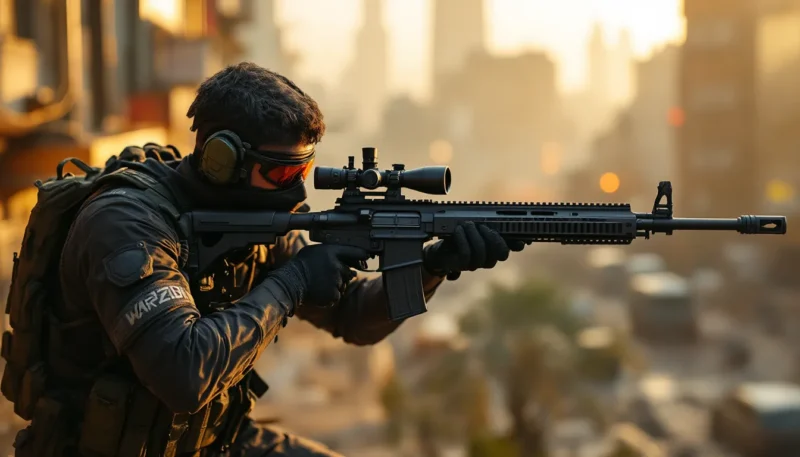
The FFAR has been a polarizing weapon in Warzone since its introduction during the Cold War integration. It’s been buffed, nerfed, and tweaked more times than most players can count, but in 2026, it’s settled into a comfortable spot as a reliable close-to-mid range option that rewards aggressive playstyles. If you’re tired of meta-chasing and want a gun that punishes mistakes while rewarding precision, the FFAR might be exactly what your loadout needs.
This isn’t the laser-beam AR that dominated Season 2 of Verdansk back in 2021, those days are long gone. What we have now is a more balanced weapon that excels in specific scenarios and struggles in others. The key is understanding where it shines and how to build it for your preferred engagement style. Whether you’re running it as your primary for fast rotations or pairing it with a sniper for cleanup work, this guide covers everything you need to know about the FFAR in Warzone’s current meta.
Key Takeaways
- The FFAR in Warzone 2026 is a reliable close-to-mid range assault rifle (10-35 meters) that rewards aggressive playstyles and mechanical skill over raw weapon balance.
- The FFAR’s high fire rate of 909 RPM makes it forgiving on missed shots compared to slower ARs, but its aggressive recoil pattern and limited magazine capacity require disciplined burst-fire at distance.
- Three distinct FFAR loadouts excel in different scenarios: aggressive close-range builds with the 19.5″ Ranger barrel, balanced versatility with the Reinforced Heavy barrel for 35-40 meter engagement, and sniper support with minimal attachments for sub-250ms ADS.
- Pre-aiming, positioning within cover, and smart mobility through slide-canceling and serpentine movement are critical to maximizing the FFAR’s potential, as its handling is good but not SMG-speed.
- The FFAR outperforms the Grau under 30 meters and the STG44 in raw handling speed, but falls short beyond 40 meters, making secondary weapon pairing with a sniper or long-range AR essential for complete loadout versatility.
- The FFAR remains A-tier viable in the 2026 meta after Season 3 Reloaded buffs, particularly in Resurgence mode and trios/quads, though it thrives most with players who understand its engagement range limitations and can leverage aggressive positioning.
What Is the FFAR in Warzone?
The FFAR 1 (Famas Fusil Automatique) is a fully automatic assault rifle that originated from Call of Duty: Black Ops Cold War and carried over into Warzone’s unified weapon ecosystem. It’s classified as an AR but behaves more like a hybrid between an assault rifle and an SMG, with a faster fire rate than most traditional ARs and handling characteristics that favor mobility over long-range stability.
Weapon Overview and Stats
As of the Season 3 Reloaded update in 2026, the FFAR sits in an interesting place stat-wise. Here’s what you’re working with:
- Damage Profile: 29 chest/stomach, 26 limbs, 36 head (up to 25 meters)
- Fire Rate: 909 RPM (one of the fastest among ARs)
- TTK (Time to Kill): Approximately 640ms at optimal range with chest shots
- Magazine Size: 25 rounds standard, extendable to 50
- Bullet Velocity: 600 m/s base (improvable with attachments)
- Effective Range: 10-35 meters depending on build
The weapon handles like a heavier SMG rather than a true AR. Base ADS speed clocks in at 267ms, which is fast for the AR category but slower than dedicated SMGs. Movement speed sits at 95% of base, making it relatively nimble for rotating and repositioning during fights.
FFAR Strengths and Weaknesses
Understanding where the FFAR excels and where it falls short is crucial for deciding if it fits your playstyle.
Strengths:
- High fire rate translates to forgiving TTK if you hit your shots, miss a bullet or two and you’re still competitive
- Excellent mobility for an AR, letting you slide-cancel and reposition faster than Grau or STG users
- Versatile attachment options allow you to tune it for close-range aggression or push it toward mid-range viability
- Strong hip-fire accuracy makes it dangerous in building interiors without ADSing
Weaknesses:
- Aggressive recoil pattern with noticeable horizontal bounce after the first 10 rounds
- Limited range effectiveness beyond 40 meters, damage drop-off and recoil make it unreliable
- Magazine burns fast at 909 RPM: even the 50-round mag feels inadequate in squad wipes
- Bullet velocity requires leading shots at distance, which isn’t intuitive for players used to hitscan-like ARs
Best FFAR Loadouts for Warzone in 2026
The beauty of the FFAR is its adaptability. You can build it three distinct ways depending on whether you’re running it solo, pairing it with a sniper, or need something that does a bit of everything.
Aggressive Close-to-Mid Range Loadout
This is the “push everything” build for players who thrive in close quarters and don’t plan on taking fights past 30 meters.
Attachments:
- Muzzle: Agency Suppressor
- Barrel: 19.5″ Ranger
- Optic: Microflex LED (or Iron Sights if comfortable)
- Underbarrel: Field Agent Grip
- Ammunition: 50 Rnd
Why it works: The Agency Suppressor keeps you off the minimap while adding range. The 19.5″ Ranger barrel pushes your damage range out to 28 meters and improves bullet velocity enough to stay competitive. Field Agent Grip tames vertical recoil substantially, and the 50-round mag gives you enough ammo to challenge multiple opponents without reloading.
This build sacrifices ADS speed for control and range extension. You’re sitting around 300ms ADS, which is manageable if you pre-aim common angles and don’t get caught sprinting into fights.
Balanced Versatility Loadout
For players who want one gun that handles most situations without a dedicated secondary, this build extends your effective range to 35-40 meters.
Attachments:
- Muzzle: Agency Suppressor
- Barrel: 19.5″ Reinforced Heavy
- Optic: Axial Arms 3x
- Underbarrel: Field Agent Grip
- Ammunition: 50 Rnd
Why it works: The Reinforced Heavy barrel maxes out bullet velocity at 875 m/s and extends your damage range further than any other barrel option. The Axial Arms 3x gives you magnification for mid-range tracking without the ADS penalty of higher-zoom optics. You’ll notice the slower handling, but competitive players using optimized sensitivity settings can compensate with faster flicks and better crosshair placement.
This is the closest you can get to making the FFAR a legitimate AR rather than an SMG substitute.
Sniper Support Loadout
If you’re running a Kar98k, HDR, or ZRG as your primary, you need something fast and lethal for close-range panic situations.
Attachments:
- Muzzle: Sound Suppressor (Tactical Suppressor for faster ADS)
- Barrel: None (or Takedown for extra control)
- Optic: None (Iron Sights)
- Underbarrel: Bruiser Grip or Patrol Grip
- Stock: Raider Stock
- Ammunition: 50 Rnd
Why it works: This build prioritizes speed above all else. You’re getting sub-250ms ADS with exceptional sprint-to-fire and strafe speeds. The Raider Stock improves ADS movement speed by 10%, letting you win strafe-battles against SMG users who expect ARs to be slower.
Range takes a hit, you’re effective out to maybe 20 meters, but that’s fine when your job is cleaning up after sniper hits or defending yourself while repositioning.
Optimal Attachments Breakdown for the FFAR
Let’s dive deeper into individual attachment categories so you understand what each option actually does to the weapon’s performance.
Muzzle and Barrel Choices
Muzzles:
- Agency Suppressor: The gold standard. Sound suppression, +15% range, +30% bullet velocity. Costs 10% ADS speed but that’s acceptable.
- Sound Suppressor: Keeps you hidden with minimal stat penalties. Use this if you can’t afford ADS slowdown.
- Flash Guard: Pointless for Warzone. Stick with suppressors.
Barrels:
- 19.5″ Reinforced Heavy: Maximum bullet velocity (875 m/s) and +100% range. Heaviest ADS penalty at -15%.
- 19.5″ Ranger: Balanced option with +40% velocity and +60% range. Only -8% ADS penalty.
- Takedown: Slight recoil reduction with minimal penalties. Good for sniper support builds where you skip muzzle attachments.
Optics and Underbarrel Recommendations
Optics:
Many players skip optics entirely because the FFAR’s iron sights are clean and don’t obstruct targets. If you do want magnification:
- Microflex LED: No penalty, clear sight picture for close-range.
- Axial Arms 3x: Best mid-range optic with manageable ADS penalty.
- Visiontech 2x: Middle ground, though most prefer either no optic or the Axial.
Underbarrels:
- Field Agent Grip: The only underbarrel that matters for most builds. -6% vertical recoil and substantial horizontal stabilization. Costs 6% sprint-to-fire but you’re not running a true SMG anyway.
- Bruiser Grip: +40% melee damage. Only for sniper support meme builds.
- Patrol Grip: +6% movement speed. Situational for ultra-mobile loadouts.
Magazine, Rear Grip, and Stock Options
Magazines:
There’s really no debate here, run the 50 Rnd magazine. The 25-round base is suicide in trios or quads, and the 38 Rnd Speed Mag doesn’t provide enough capacity to justify it. The 50-rounder adds 15% ADS penalty but gives you room to miss shots and still secure kills.
Rear Grips:
Most builds don’t use rear grips because you need the magazine slot. If you’re experimenting:
- Airborne Elastic Wrap: +30% ADS and +90% flinch resistance. Strong option if you’re running a no-optic sniper support build and skip the barrel.
- Serpent Wrap: +25% ADS only. Less value than Airborne unless you never get shot first.
Stocks:
- Raider Stock: +10% ADS movement and +30% aim walking steadiness. Critical for aggressive players who strafe constantly.
- SAS Combat Stock: Improved ADS speed. Less impactful than Raider for Warzone’s longer engagements.
- No Stock: Removes stock for faster sprint-to-fire but adds hip-fire spread. Usually not worth it after multiple nerfs.
How to Use the FFAR Effectively in Warzone
Owning the right attachments means nothing if your positioning and mechanics don’t match the weapon’s strengths. Here’s how to maximize the FFAR’s potential.
Engagement Ranges and Positioning
The FFAR lives in the 10-35 meter sweet spot depending on your build. Closer than 10 meters, purpose-built SMGs like the Lachmann Sub or Fennec will shred you. Beyond 40 meters, you’re getting outgunned by Graus, STGs, and any competent marksman rifle user.
Ideal scenarios:
- Building-to-building fights where you’re contesting windows and doorways
- Mid-range rotations through open areas where you can laser stragglers
- Third-partying teams already engaged (your fire rate lets you delete weakened enemies fast)
Avoid:
- Long sightlines across open fields
- Extended mag-dump battles against LMGs with superior ammo capacity
- Challenging snipers at range, even with the Axial 3x, you’re at a disadvantage
Positioning matters more with the FFAR than with forgiving meta weapons. You need cover within 2-3 seconds of movement to break line-of-sight and reset engagements. Don’t commit to open-ground sprints unless you’re certain the area is clear.
Movement and Mobility Tips
The FFAR’s mobility is one of its best features, but you need to lean into it deliberately. Advanced players featured in competitive FPS guides consistently emphasize movement as the determining factor in close-range fights.
Key techniques:
- Slide-canceling: Still viable in 2026 (though nerfed slightly from earlier years). Use it to break camera angles and maintain momentum between cover points.
- Jump-shotting around corners: The FFAR’s ADS strafe speed with Raider Stock makes you harder to track during aerial peeks.
- Serpentine movement: Don’t sprint in straight lines. Zigzag patterns make you 30-40% harder to hit at mid-range.
- Pre-aiming high-traffic zones: Your ADS isn’t SMG-fast, so pre-aim common angles like stairwells, doorways, and buy station approaches.
Couple this with Dead Silence when you have it, and you become a nightmare to deal with in final circles or urban combat zones.
Recoil Control Techniques
The FFAR’s recoil isn’t terrible, but it’s not a laser either. The first 8-10 rounds climb vertically with minimal horizontal deviation. After that, you get unpredictable side-to-side bounce that throws off sustained fire.
How to manage it:
- Burst fire beyond 25 meters: Tap in 8-10 round bursts rather than full-auto mag dumps. This keeps you in the controllable vertical phase.
- Pull down and slightly right: The recoil drifts marginally left, so counteract with gentle right-stick (or mouse) pressure while pulling down.
- Use Field Agent Grip: Non-negotiable for most builds. It cuts horizontal bounce significantly.
- Train in Firing Range: Spend 15 minutes on the Firing Range targets at various distances. Muscle memory beats theory every time.
If you’re struggling, temporarily run the Reinforced Heavy barrel with Field Agent Grip, the added stability makes learning the pattern much easier before you graduate to faster-handling builds.
FFAR vs. Other Popular Assault Rifles
How does the FFAR stack up against the current AR meta? Let’s break down the matchups against three popular competitors.
FFAR vs. Grau 5.56
The Grau is the comfort-food AR, easy recoil, consistent TTK, effective out to 60+ meters with the right build.
Comparison:
- TTK: FFAR wins under 30 meters (640ms vs. 720ms). Beyond that, the Grau’s accuracy and range give it the edge.
- Recoil: Grau is substantially easier to control, especially for newer players.
- Mobility: FFAR is noticeably faster, better for aggressive rotations and building pushes.
- Versatility: Grau handles more situations competently: FFAR dominates specific ranges but struggles elsewhere.
Verdict: Choose the FFAR if you play aggressively and take mostly close-to-mid fights. Pick the Grau if you want a weapon that never feels like the wrong choice.
FFAR vs. STG44
The STG44 has become a staple in 2026 Warzone thanks to its excellent damage profile and manageable recoil.
Comparison:
- TTK: Nearly identical in optimal ranges (STG edges slightly at 35+ meters).
- Fire Rate: FFAR’s 909 RPM destroys the STG’s 720 RPM up close, making missed shots less punishing.
- Handling: FFAR is faster in every category, ADS, sprint-to-fire, movement speed.
- Range: STG remains viable out to 50+ meters: FFAR drops off hard past 40.
Verdict: If you’re pairing with a sniper or focusing on close-quarters dominance, FFAR wins. For solo primary weapon duty, the STG’s range and ease-of-use make it more reliable.
FFAR vs. CR-56 AMAX
The AMAX is the high-skill, high-reward AR that punishes body shots but rewards headshots with absurd TTK.
Comparison:
- TTK: AMAX wins if you hit headshots (sub-600ms). FFAR wins with body shots due to fire rate forgiveness.
- Recoil: Both have notable kick: AMAX is vertical but sharp, FFAR bounces horizontally.
- Mag Size: AMAX caps at 45 rounds: FFAR gets 50 but burns through them 20% faster.
- Skill Floor: AMAX requires precision. FFAR is more forgiving for average accuracy players.
Verdict: Choose AMAX if you consistently hit upper chest and headshots. Stick with FFAR if your accuracy is inconsistent or you prefer a faster-handling weapon.
Best Perks and Equipment to Pair with the FFAR
Your perks and equipment should complement the FFAR’s aggressive, mobile playstyle.
Recommended Perk Combinations
Slot 1 (Blue Perks):
- Double Time: Doubles Tactical Sprint duration. Essential for FFAR users who need to rotate quickly and close distance on opponents.
- E.O.D.: Reduces explosive damage. Useful if you’re pushing buildings where teams spam Semtex and Claymores.
Slot 2 (Red Perks):
- Overkill: Lets you run a sniper or long-range AR secondary. Mandatory unless you’re picking up ground loot for range.
- Tempered (after first loadout): Faster plate application in solos or duos can be clutch during extended fights.
Slot 3 (Yellow Perks):
- Amped: Faster weapon swaps are critical when running Overkill. Shaves 200+ ms off your swap time, which wins fights.
- Combat Scout: Marks enemies you damage for 3 seconds. Strong in teams with good communication, though many players featured in esports strategy content still prefer the reliability of Amped.
Optimal Loadout Setup:
- First Loadout: Overkill with Double Time, Overkill, and Amped. Grab your FFAR and sniper/long-range secondary.
- Second Loadout: Swap to Ghost (replacing Overkill) to disappear from UAVs. Keep your primary weapons.
Tactical and Lethal Equipment
Tacticals:
- Stun Grenades: Best for pushing buildings. Stun the doorway, slide in with FFAR ready, clean up.
- Heartbeat Sensor: Information wins games. Pair this with Ghost after your second loadout for maximum map awareness.
Lethals:
- Semtex: Reliable damage and sticks to players trying to flee.
- Throwing Knife: One-shot downed enemies instantly, saving FFAR ammo for their teammates.
- Proximity Mine: Decent for covering your flanks during rotations or holding buildings.
Secondary Weapon Pairings for the FFAR
The FFAR’s range limitations mean your secondary needs to handle engagements beyond 40 meters. Here are the best pairings for 2026.
Sniper Rifles:
- Kar98k: Fast ADS, excellent bullet velocity. The classic pairing. You handle long-range picks and use FFAR for followups or close-range defense.
- HDR: Slower handling but unmatched range and bullet drop consistency. Better for passive, long-range playstyles.
- ZRG 20mm: One-shot downs to the chest in some armor configurations. High risk, high reward.
Marksman Rifles:
- SP-R 208: Faster than true snipers with similar one-shot potential. Great for aggressive snipers who like to reposition frequently.
Long-Range ARs:
If you don’t snipe, pair the FFAR with a range-focused AR for weapon diversity.
- Grau 5.56: Build for 60+ meter beaming. Covers everything the FFAR can’t reach.
- Kilo 141: Similar to Grau but slightly better bullet velocity at the cost of marginally worse recoil.
- STG44: Already discussed above. Solid choice if you want two viable primary weapons.
What NOT to pair:
Avoid SMGs unless you’re memeing. The FFAR already handles close range, so running dual close-range weapons leaves you helpless at distance. Pistols are emergency-only options when you’re out of ammo, never plan around them.
Common FFAR Mistakes to Avoid
Even experienced players make these errors when running the FFAR. Here’s what to watch out for.
Over-engaging at range: The biggest mistake. The FFAR’s bullet velocity and recoil make 50+ meter fights coin flips at best. If someone is beaming you from distance, disengage and reposition rather than trading shots. Your damage output plummets while theirs stays consistent.
Ignoring the magazine constraint: 50 rounds at 909 RPM is about 3.3 seconds of continuous fire. In squads, that’s barely enough to down two opponents if every shot connects (spoiler: they won’t). Don’t spray wildly. Controlled bursts and deliberate targeting keep you from running dry mid-fight.
Building for ADS speed without considering recoil: Seeing 230ms ADS on paper feels great until you realize you can’t land shots past 15 meters. Balance speed with control, Field Agent Grip is almost always worth the minor penalty.
Forgetting to pre-aim: The FFAR’s handling is good for an AR but still 80+ ms slower than meta SMGs. If you’re sprinting around corners into enemies, you’re dead before you can ADS. Pre-aim common angles, use tactical sprint selectively, and keep your weapon up when clearing buildings.
Not adapting loadout to playstyle: Running the sniper support build as your primary weapon, or using the balanced versatility build when you only take 20-meter fights? Match your attachments to how you actually play, not what looks good on paper.
Challenging in the open: The FFAR doesn’t have the range or mag capacity to win extended open-field battles. Use cover aggressively, peek, fire, break line-of-sight, re-peek from a different angle. Static standing fights favor higher-capacity weapons.
Meta Updates and FFAR Viability in 2026
As of March 2026, the Warzone meta has stabilized significantly compared to the chaos of earlier seasons. The FFAR sits comfortably in the A-tier for assault rifles, not dominant, but viable in the right hands.
Recent Balance Changes:
The Season 3 Reloaded update (February 2026) made minor adjustments:
- Increased base bullet velocity from 580 m/s to 600 m/s
- Slight reduction in horizontal recoil magnitude (about 7% less deviation)
- No changes to damage profile or fire rate
These tweaks improved the weapon’s consistency at 30-35 meters without pushing it back to its overpowered 2021 state. The devs seem content leaving the FFAR as a skill-rewarding option rather than a braindead meta pick.
Current Meta Landscape:
The AR meta is diverse right now. Top-tier competitive players rotate between:
- STG44 (consistent and forgiving)
- Grau 5.56 (range and ease-of-use)
- CR-56 AMAX (high skill ceiling)
- Kilo 141 (resurgence in popularity after minor buff)
- FFAR (aggressive close-mid specialist)
The FFAR won’t single-handedly carry you to wins, but it’s not holding you back either. It rewards good movement, positioning, and recoil control, traits that make you a better player overall.
Viability by Mode:
- Battle Royale: Solid choice for trios and quads if you have a team that covers long-range angles. Less ideal for solos due to limited versatility.
- Resurgence: Thrives here. The faster pace and shorter sightlines play directly into the FFAR’s strengths.
- Plunder: Perfectly fine, though most players optimize for different priorities in this mode.
Will it get nerfed or buffed? Unlikely in the near term. The FFAR’s pick rate is healthy but not dominant, and its win rate correlates with player skill rather than weapon imbalance. Expect it to remain stable through at least Season 4.
Conclusion
The FFAR in 2026 isn’t the meta-defining monster it was during Verdansk’s prime, and that’s probably for the best. What it is now is a rewarding weapon for players who understand positioning, movement, and when to take fights. It punishes sloppy play but rewards aggression and mechanical skill in equal measure.
If you’re willing to learn its recoil pattern, respect its range limitations, and build it thoughtfully for your playstyle, the FFAR can absolutely hold its own against the current AR meta. The versatility to spec for close-range dominance, balanced mid-range play, or sniper support means there’s an FFAR build for almost any loadout philosophy.
Pair it with the right secondary, dial in your sensitivity and movement patterns, and lean into the 10-35 meter engagements where it excels. You won’t win every fight, no weapon guarantees that, but you’ll have a tool that gives you a legitimate chance when played correctly. And in a meta as diverse as 2026’s, that’s exactly what you want.
About The Author