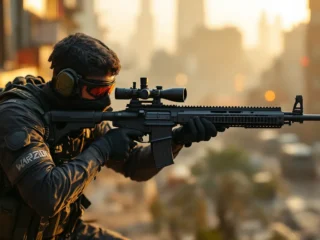
The Grau 5.56 has been a staple in Warzone’s arsenal since the early days of Verdansk, and even in 2026, this laser-accurate assault rifle continues to hold its ground. While the meta shifts with every season and patch, the Grau’s unmatched recoil control and smooth handling keep it relevant for players who value consistency over raw damage output. Whether you’re beaming enemies at 80 meters or holding down sightlines in Urzikstan, the right Grau warzone loadout can turn mid-range engagements into easy eliminations.
This guide breaks down everything you need to know about the warzone Grau in the current season, from optimal attachment combinations and gunsmith stats to perk synergies and advanced positioning tactics. If you’ve been sleeping on this weapon or just want to refine your build, you’re about to discover why experienced players keep coming back to the Grau 5.56.
Key Takeaways
- The Grau 5.56 remains a top-tier Warzone assault rifle in 2026 due to its unmatched recoil control and reliability, making it ideal for mid-range engagements where accuracy separates wins from losses.
- Three proven Grau Warzone loadout configurations excel in different playstyles: the long-range beamer setup for sightline dominance, the versatile all-rounder for adaptable gameplay, and the aggressive close-to-mid build for faster handling.
- The Grau’s strength lies in its 40–80 meter effective range with ~680ms TTK at optimal distance; pair it with an SMG for close quarters or a sniper rifle for extended range support to cover its engagement gaps.
- Positioning discipline matters more than raw weapon damage—claim mid-range sightlines early, maintain 50–80 meter engagement distances, and avoid forcing fights outside your effective range to maximize the Grau’s accuracy advantage.
- Avoid common mistakes like over-relying on recoil forgiveness without proper aim practice, building for unused range, neglecting the Ghost perk in late-game, and skipping headshot training that boosts your TTK significantly.
Why the Grau 5.56 Remains a Warzone Fan Favorite
The Grau 5.56 doesn’t top TTK charts or boast the highest damage per mag. So why does it still show up in loadouts across ranked and casual lobbies? The answer comes down to reliability. When bullets land exactly where you aim them, your effective DPS goes up, and the Grau delivers that better than almost any AR in its class.
Key Strengths of the Grau 5.56
Here’s what makes the Grau stand out in Warzone’s crowded AR pool:
- Negligible recoil: The Grau’s vertical climb is minimal, and horizontal bounce is nearly nonexistent. Even without a foregrip, most players can stay on target at ranges where competitors start spraying wildly.
- Fast ADS and mobility: With the right attachments, the Grau handles more like a hybrid weapon than a traditional AR, letting you snap onto targets without sacrificing range.
- Clean iron sights: The default Archangel blueprint (and several others) features some of the cleanest irons in the game, freeing up an attachment slot if you’re comfortable without an optic.
- Forgiving damage falloff: While the Grau doesn’t hit as hard as the STG44 or FFAR up close, its damage stays competitive out to about 60 meters, then drops off gradually rather than cliff-diving.
- Consistent performance across updates: Unlike flavor-of-the-month weapons that get hammered by nerfs, the Grau has remained relatively stable through balance patches, making investment in mastery worthwhile.
These qualities make the Grau ideal for players who prioritize accuracy and predictability. If you’re the type who takes measured engagements rather than W-keying every fight, this rifle rewards that playstyle.
When to Choose the Grau Over Meta Alternatives
The Grau shines in specific scenarios where its strengths outweigh raw TTK advantages:
Pick the Grau when:
- You’re playing at mid-range (40–80m) where recoil control separates hits from misses
- You need a versatile primary that can handle both open-field rotations and indoor cleanup
- Your aim is solid but not perfect, the Grau forgives tracking errors better than high-recoil alternatives
- You want a “set it and forget it” loadout that won’t get gutted by the next patch
Choose something else when:
- You’re exclusively fighting inside 30 meters (SMGs or close-range ARs like the AS44 will outpace you)
- You need maximum range dominance beyond 100m (LMGs or marksman rifles make more sense)
- You’re chasing absolute meta TTK in tournament play (there are marginally faster killers, though they demand better recoil management)
The Grau isn’t a crutch weapon, but it’s not a meme pick either. It occupies a sweet spot where skill expression meets accessibility, good players make it look effortless, and average players immediately feel the difference in hit registration.
Best Grau 5.56 Loadouts for Warzone in 2026
Here are three proven Grau warzone loadout configurations tailored to different engagement styles. All builds assume you’re running this as your primary AR, not a sniper support.
Long-Range Beamer Loadout
This setup maximizes range and recoil stability for holding sightlines and contesting medium-to-long engagements.
Attachments:
- Muzzle: Monolithic Suppressor (sound suppression + range boost)
- Barrel: Tempus 26.4″ Archangel (bullet velocity and range extension)
- Optic: VLK 3.0x Optic (clean sight picture, slight recoil reduction)
- Underbarrel: Commando Foregrip (stabilizes horizontal bounce)
- Ammunition: 60 Round Mags (sustained fire in squad fights)
Playstyle notes:
This is the classic “beam machine” Grau build that dominated Verdansk and still works beautifully on Urzikstan’s open sightlines. The Monolithic + Archangel combo pushes your effective range past 70 meters while keeping the recoil pattern tight enough to land headshots. The VLK optic adds a touch of zoom without the tunneling effect of higher magnifications.
Expect slower ADS (around 350ms) and reduced mobility, this isn’t a run-and-gun setup. Post up on headglitches, third-party rotations, and lock down zones. The 60-round mag ensures you can pressure multiple targets without reloading mid-fight.
Versatile All-Rounder Loadout
Balanced for players who want flexibility across engagement ranges without committing to pure beaming or aggressive pushes.
Attachments:
- Muzzle: Monolithic Suppressor
- Barrel: Tempus 26.4″ Archangel
- Optic: Corp Combat Holo Sight (or run irons and swap for Tac Laser)
- Underbarrel: Merc Foregrip (hipfire stability + vertical recoil control)
- Rear Grip: XRK Void II (faster ADS)
Playstyle notes:
This grau warzone loadout splits the difference between beaming and mobility. The Merc Foregrip improves hipfire accuracy enough to win surprise CQC encounters, while the XRK Void II shaves off enough ADS time to feel responsive. If you’re comfortable with the Archangel blueprint’s iron sights, drop the optic for a Tac Laser and gain even snappier target acquisition.
Use this build when your squad composition lacks a dedicated flex player, or when the circle demands frequent repositioning. It won’t excel at any single range, but it’s competent everywhere.
Aggressive Close-to-Mid Range Loadout
Designed for players who want the Grau’s accuracy but need faster handling to compete inside 50 meters.
Attachments:
- Muzzle: Tactical Suppressor (smaller range penalty than Monolithic, faster ADS)
- Barrel: FSS 20.8″ Nexus (damage range boost without heavy mobility hit)
- Laser: Tac Laser (ADS speed increase)
- Underbarrel: Operator Foregrip (recoil stabilization with minimal ADS penalty)
- Ammunition: 50 Round Mags (lighter than 60, still enough for team wipes)
Playstyle notes:
This setup treats the Grau like a heavy SMG, fast enough to challenge aggressive players but accurate enough to punish them at AR ranges. The Nexus barrel keeps damage competitive out to about 50 meters, while the Tac Laser and Tactical Suppressor combo brings ADS down to around 280ms.
Pair this with an aggressive secondary (shotgun or sniper rifle for quickscoping) and run it when you’re comfortable taking fights rather than avoiding them. Many competitive players favor custom sensitivity settings to maximize tracking with this faster build.
Attachment Breakdown: Optimizing Your Grau Build
Understanding why each attachment matters helps you adjust builds for specific situations or personal preference. Here’s the deep dive.
Muzzle and Barrel Choices
Muzzle options:
- Monolithic Suppressor: The default choice for serious play. Adds roughly 10% range, keeps you off the minimap, but costs about 30ms ADS time. Non-negotiable if you’re running the Grau past 60 meters.
- Tactical Suppressor: Lighter alternative with only 5% range boost but half the ADS penalty. Works for aggressive builds where silence matters but speed matters more.
- Compensator: Rarely worth it, the Grau’s vertical recoil is already minimal, and you sacrifice suppression.
Barrel options:
- Tempus 26.4″ Archangel: The gold standard. Adds 35% bullet velocity and extends damage ranges significantly. The mobility hit is real (movement speed drops about 2%), but the accuracy gains justify it for most builds.
- FSS 20.8″ Nexus: Middle ground option. Gives about 60% of the Archangel’s benefits with only half the penalties. Best for versatile or aggressive setups.
- No barrel: Only viable if you’re running the Grau as a sniper support weapon inside 40 meters. You lose too much effective range otherwise.
Pro tip: The Archangel blueprint’s default barrel already includes the Tempus 26.4″ stats, which is why it’s been the go-to variant since Warzone launched.
Optics and Underbarrel Attachments
Optic choices:
- VLK 3.0x: Adds slight recoil reduction (about 8% vertical stabilization) along with 3x magnification. The go-to for long-range builds.
- Corp Combat Holo / G.I. Mini Reflex: Clean 1x sights for players who want a red dot without the ADS penalty of higher zooms.
- Iron sights (Archangel blueprint): Legitimately competitive. The circular housing with center dot is cleaner than most optics. Frees up an attachment slot for Tac Laser or alternate grips.
Underbarrel attachments:
- Commando Foregrip: Reduces horizontal recoil deviation, which is where the Grau needs the least help. Still a solid choice because horizontal bounce, even minimal, matters at 70+ meters.
- Merc Foregrip: Boosts hipfire spread and vertical recoil control. The ADS penalty (20ms) is noticeable but manageable. Best for all-rounder and aggressive builds.
- Operator Foregrip: Recoil stabilization (reduces bouncing while aiming) with minimal downsides. Underrated for players who already manage recoil well through input control.
- Ranger Foregrip: Overkill on the Grau. Too much ADS penalty for marginal recoil benefits you don’t need.
Ammunition and Rear Grip Options
Magazine choices:
- 60 Round Mags: Standard for squad modes. The Grau’s low damage per bullet means you need volume in teamfights. Movement speed hit is about 3%, which is noticeable but not crippling.
- 50 Round Mags: Lighter option for solos or duos. Saves about 1.5% movement speed and slightly improves ADS.
- Avoid extended mags entirely in Resurgence modes, you’ll respawn before running through a 50-rounder in most fights.
Rear grip options:
- XRK Void II: Shaves roughly 25ms off ADS. The go-to for any build that isn’t pure long-range beaming.
- Granulated Grip Tape: Improves ADS stability (less sway when acquiring targets). Niche pick for controller players who struggle with initial tracking.
- Stippled Grip Tape (if available): Faster sprint-to-fire but less ADS benefit than XRK Void. Rarely the best choice for Grau specifically.
Most players run either Commando or Merc underbarrel depending on playstyle, paired with XRK Void rear grip for balanced builds. The only time you skip rear grip is when you’re maxing out range and recoil (Monolithic, Archangel, VLK, Commando, 60-round).
Grau 5.56 Gunsmith Stats and Performance Analysis
Let’s look at the numbers that matter. The Grau isn’t a meta tyrant, but its stats tell the story of why it remains competitive.
Damage Profile and TTK Comparison
The Grau 5.56 fires 5.56x45mm NATO rounds at 750 RPM with the following damage model (as of Season 2 Reloaded, 2026):
Damage per shot:
- Head: 28
- Chest/stomach: 23
- Limbs: 21
Damage ranges (with Monolithic + Archangel):
- 0–48m: Full damage
- 48–78m: First dropoff (19 chest damage)
- 78m+: Second dropoff (17 chest damage)
TTK (time-to-kill) at optimal range, all chest shots:
- 0–48m: ~680ms (9 shots to down 250 HP)
- 48–78m: ~760ms (11 shots)
- 78m+: ~840ms (12 shots)
For comparison, the current top-tier ARs like the SVA 545 and RAM-7 kill about 50–80ms faster at close range, but their recoil patterns demand better control. The Grau’s effective TTK, accounting for missed shots due to recoil, often beats them in real-world scenarios, especially for average-skill players.
Headshot multiplier impact: Landing just two headshots in your spray drops TTK by about 80ms, which is why the Grau rewards aim placement. Detailed damage breakdowns and meta comparisons are updated regularly as patches shift weapon balance.
Recoil Pattern and Control Tips
The Grau’s recoil is its defining feature. Here’s what the pattern looks like:
First 10 rounds: Nearly pure vertical climb, about 15% less than comparable ARs. Minimal horizontal drift (roughly ±2 pixels at center screen).
Rounds 11–30: Slight rightward pull (about 5% horizontal variance). Still highly controllable with minor left stick/mouse compensation.
Rounds 31+: Pattern stabilizes into a tight vertical stack. By round 40, you’re essentially drawing a straight line if you’re compensating properly.
Control techniques:
- Mouse players: Gentle downward pull starting around round 3. The Grau requires about 40% less vertical compensation than something like the Kilo 141.
- Controller players: Slight down-left analog pressure. Most players overcompensate, start with less input than you think.
- Burst firing: Unnecessary inside 60 meters unless you’re correcting for target movement. The full-auto recoil is manageable enough to hold the trigger.
- Attachment priority: Commando Foregrip eliminates the minor horizontal bounce. Operator Foregrip smooths the visual shake during sustained fire.
Practice tip: Load into Plunder or a private match and mag-dump at walls from 50m. You’ll notice the Grau’s bullet spread stays inside a torso-sized area even without active recoil control, that’s the margin of error that keeps you competitive when your tracking isn’t perfect.
Best Secondary Weapons to Pair with the Grau
The Grau handles mid-range beautifully but needs support for extreme ranges and close-quarters chaos. Here’s what works.
SMG Pairings for Close-Quarter Dominance
Since the Grau excels at 40–80 meters, pair it with an SMG that dominates inside 25m:
Top picks:
-
Striker 9: Currently the most popular SMG in ranked modes. Fast TTK (~550ms), manageable recoil, and 50-round mags. Run it with Monolithic Suppressor, Striker Elite Long barrel, 50 Round Drum, and your choice of laser/grip. This combo lets you W-key buildings while the Grau covers rotations.
-
ISO 45: Slightly slower TTK than Striker but better hipfire spread. Ideal for players who struggle with SMG tracking. The 40-round default mag is workable, but swap to 50 if you’re in trios or quads.
-
Lachmann Sub (MP5): The classic. Still viable in 2026 even though power creep. The 9mm ammo conversion keeps it snappy, and the recoil pattern is burned into muscle memory for veteran players.
Loadout philosophy: Run Overkill on your first loadout to grab both weapons. Switch to Ghost on your second loadout (or pick up a free loadout weapon if circle RNG allows). The Grau + SMG combo ensures you’re never caught at the wrong range.
Sniper and Marksman Rifle Combinations
If your squad already has CQC covered, pair the Grau with a one-shot potential weapon for long pokes:
Sniper options:
-
ZRG 20mm: One-shot headshot potential out to ridiculous ranges. The Grau becomes your mid-range cleanup tool when sniper shots crack but don’t down. Slow ADS and heavy flinch make this a high-skill pairing.
-
MCPR-300: Faster handling than ZRG with similar one-shot range. More forgiving for players still learning sniper mechanics.
Marksman rifles:
-
KV Broadside (if running slug rounds): Functions like a pocket sniper with better mobility. The Grau covers everything outside the Broadside’s one-tap range (roughly 60m with slugs).
-
EBR-14: Two-shot potential with fast follow-ups. Less punishing than bolt-actions if you whiff the headshot. The Grau fills the gap when you need full-auto stability.
Tactical note: Sniper + Grau pairings demand better positioning awareness. You’re weak inside 30 meters, so coordinate with teammates or play around natural cover. If you’re in squad-based modes, ensure at least one teammate runs an SMG to cover your weakness.
Perks, Equipment, and Tactical Setup for Grau Loadouts
The right perks amplify the Grau’s strengths and cover its gaps. Here’s the optimal setup for most situations.
Perk Package (assuming current Warzone perk system):
-
Perk 1: Overkill (first loadout) / Double Time (second loadout)
-
Overkill lets you grab both primary weapons early. Once you’re kitted, swap to Double Time for extended tactical sprint, critical for mid-game rotations where the Grau’s mobility is already slightly compromised by range attachments.
-
Perk 2: Ghost (second loadout priority)
-
Non-negotiable once UAVs start flooding late-game. The Grau’s playstyle involves holding positions and rotating deliberately, which means you’re vulnerable to sweeps if you’re visible on radar.
-
Perk 3: Tempered or Fast Hands
-
Tempered cuts plate time significantly, which matters when you’re taking chip damage in mid-range trades. Fast Hands works if you’re running the aggressive Grau build and swapping weapons frequently.
-
Perk 4: High Alert or Bird’s Eye (if available)
-
High Alert punishes flankers, you’ll know when someone’s aiming at you from outside your FOV, which is perfect for the Grau’s reactive playstyle. Bird’s Eye (if unlocked) gives minimap intelligence for smarter positioning.
Lethal Equipment:
- Semtex: Versatile stick potential for finishing downed enemies or flushing campers.
- Frag Grenade: Better for cooking and bouncing into awkward angles. Slightly higher skill floor.
Tactical Equipment:
- Stun Grenade: The default choice. Slows enemy movement enough to laser them with the Grau’s accuracy.
- Snapshot Grenade: Intel-focused alternative. Helps pre-aim corners when pushing buildings.
Field Upgrade:
- Trophy System: Essential for final circles when nades start flying. Protects your position while you hold sightlines.
- Dead Silence: Aggressive alternative for players using the close-range Grau build. Rotate silently, catch enemies off-guard, beam them before they react.
This setup prioritizes survivability and information, both align with the Grau’s methodical, accuracy-first playstyle. You’re not an entry fragger: you’re the consistent damage dealer who capitalizes on positioning and aim.
Advanced Strategies and Gameplay Tips with the Grau
Mastering the Grau goes beyond attachments. Here’s how to leverage its unique characteristics in actual matches.
Positioning and Engagement Distance
The Grau thrives in the 50–80 meter sweet spot where most ARs start losing accuracy but SMGs can’t reach. Engineer your fights to happen in that range:
Positioning principles:
-
Claim mid-range sightlines early: Identify natural chokepoints (bridges, open fields between buildings, ridgelines) and set up before enemies rotate through. The Grau’s laser beam lets you contest these areas even against players with cover.
-
Avoid extreme CQC: If you’re running the long-range build, don’t push buildings unless you have to. Let SMG teammates clear interiors while you lock down exits. If you must enter, pre-aim corners and use the Grau’s hipfire (especially with Merc Foregrip) to win reaction-time battles.
-
Maintain spacing in teamfights: Stay 10–15 meters behind your most aggressive teammate. When they push and take fire, you beam the distracted enemy from a safer angle. The Grau’s recoil means you land shots while they’re focused elsewhere.
-
Headglitch abuse: The Grau’s accuracy makes partial cover exponentially more effective. Peek over railings, cars, and window ledges, expose as little of your hitbox as possible while landing full damage.
Engagement distance by circle phase:
- Early game (circles 1–3): Fight at 60–80m. Plenty of cover to disengage if you’re losing, and most teams aren’t coordinated enough to collapse on you.
- Mid game (circles 4–5): Tighten to 40–60m as buildings compress. Use your SMG more but keep Grau ready for third-party opportunities.
- Late game (circles 6+): Distances vary wildly. Position on circle edge when possible, forcing enemies to rotate into your crosshair.
Movement and Rotation Tactics
The Grau isn’t the fastest AR, so smart movement matters:
Rotation best practices:
-
Tactical sprint management: With Archangel barrel and 60-round mags, your movement speed sits around 95% of baseline. Don’t waste tac sprint crossing open ground, walk and preserve it for emergency repositioning when third-partied.
-
Weapon swap rotations: If you’re running Grau + SMG, keep the SMG out during long rotations. Swap to Grau only when approaching likely engagement zones. The SMG’s faster movement speed (typically 98–100% baseline) adds up over multiple rotations.
-
Circle edge vs. center: The Grau favors edge play. Hold the gas boundary and beam teams rotating late. Center-circle play exposes you to angles where the Grau’s slower handling can’t compete with faster weapons.
-
Cover-to-cover discipline: Never cross open ground without planning your next cover. The Grau rewards methodical movement, you should rarely be caught sprinting in the open.
Advanced tip: If you’re pinched between two teams, use the Grau to apply pressure to the weaker squad (lower health, worse position) while your teammates suppress the stronger one. The Grau’s accuracy lets you land shots even while splitting focus. Analysis from competitive Warzone resources shows that mid-tier teams who master positioning with versatile weapons like the Grau often outperform mechanically superior teams that over-rely on pure TTK.
Common Mistakes to Avoid When Using the Grau
Even experienced players fall into bad habits with the Grau. Here’s what to watch for:
Over-relying on recoil control
Yes, the Grau has minimal recoil. No, that doesn’t mean you can ignore aim training. Players get lazy with crosshair placement because the gun is forgiving, then they get stomped by opponents who pre-aim properly. Practice tracking moving targets, not just standing bots.
Building for range you’ll never use
The full meta long-range build (Monolithic, Archangel, VLK, Commando, 60-round) is overkill if you’re playing Resurgence or fighting in dense POIs. You sacrifice too much mobility for range you won’t leverage. Match your build to the mode and your squad’s playstyle.
Forcing fights outside your range
The Grau loses to dedicated snipers past 100 meters and gets shredded by SMGs inside 20. Players try to make it work everywhere and end up frustrated. Know when to disengage or switch weapons.
Neglecting headshot practice
The Grau’s TTK becomes competitive when you land headshots. Aiming center-mass is easy with low recoil, but it leaves kills on the table. Aim upper chest and let the slight vertical climb pull you into headshots naturally.
Skipping the second loadout swap
Grabbing Overkill on your first loadout is smart. Staying on Overkill into final circles is not. You need Ghost once UAVs saturate late-game. Plan your loadout drops accordingly, grab both weapons early, then swap to a Ghost class.
Poor ammo management in squad modes
The Grau chews through ammo if you’re spamming at range. 60 rounds sounds like a lot until you’re suppressing a team while your squad pushes. Reload during safe moments, and grab ammo boxes when looting. Running dry mid-fight with the Grau is especially punishing because the reload animation is about 2.2 seconds (tactical reload).
Copying builds without understanding why
Attachment choices should match your input device and skill level. Controller players benefit more from Merc Foregrip’s hipfire boost. Mouse players can skip some recoil attachments for speed. Don’t blindly copy streamer loadouts, test and adjust based on what feels consistent for you.
Avoiding these mistakes transforms the Grau from a decent AR into a reliable kill machine. The weapon rewards discipline and punishes carelessness.
Conclusion
The Grau 5.56 might not dominate patch note headlines or top-ten meta lists in 2026, but it remains one of Warzone’s most reliable assault rifles for players who value consistency and accuracy. Its forgiving recoil pattern, versatile builds, and stable performance across updates make it a smart choice when you’re tired of chasing the shifting meta.
Whether you’re running the long-range beamer setup for open-field dominance, the all-rounder build for flexibility, or the aggressive variant for close-to-mid pushes, the Grau delivers when your fundamentals are solid. Pair it with the right secondary, dial in your positioning, and avoid the common mistakes outlined above, you’ll find yourself winning more mid-range trades and finishing matches with confidence.
The warzone Grau isn’t flashy, but it’s effective. And in a battle royale where consistency often beats raw TTK, that’s exactly what you need.
About The Author