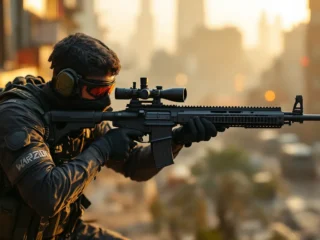
In 2026, the original Warzone, now affectionately called Warzone 1 or Verdansk-era Warzone, still holds a special place in the hearts of veteran players. While the franchise has evolved through multiple iterations, the weapon balancing, gunsmith depth, and sheer variety of the original arsenal created a meta that many consider unmatched. Whether you’re revisiting Verdansk through private lobbies, analyzing what made the original so compelling, or comparing og warzone guns to modern offerings, understanding the weapon system is essential.
This guide breaks down the complete weapon ecosystem of Warzone 1: from the stat mechanics that governed gunfights to the specific guns that dominated each range bracket. We’ll cover optimal attachments, loadout synergies, and how the meta evolved across the game’s lifecycle. If you’re looking to recapture that original Warzone magic or simply understand what made these guns legendary, you’re in the right place.
Key Takeaways
- Warzone 1 guns were defined by the deep Gunsmith system with five attachment slots that created millions of viable build combinations, rewarding players who optimized trade-offs between ADS speed, range, recoil, and handling.
- The Grau 5.56, Kilo 141, and CR-56 AMAX dominated as assault rifles by offering different playstyles: long-range beaming, versatile comfort, and high-damage precision respectively.
- Close-quarters combat relied on SMGs like the MP5 and MAC-10 over shotguns, with these weapons providing both lethality inside 15m and enough flexibility to handle rotations.
- Sniper rifles like the HDR and Kar98k controlled sight lines as primary weapons, paired with SMG secondaries to handle aggressive pushes and final-circle chaos.
- Warzone 1 guns achieved peak variety in mid-2021 when Modern Warfare, Cold War, and Vanguard weapons all competed simultaneously, preventing any single weapon pool from dominating.
- Mastering these guns required understanding engagement ranges, building complementary loadouts to cover weaknesses, and recognizing that TTK values and attachment depth created gunfights with actual counterplay opportunities.
Understanding the Warzone 1 Weapon System
Warzone 1’s gunplay was built on Modern Warfare 2019’s foundation, which meant a detailed Gunsmith system and nuanced weapon stats that rewarded optimization. Unlike simpler battle royales, every attachment choice created trade-offs that could swing engagements.
Weapon Categories and Their Tactical Roles
The game divided its arsenal into distinct categories, each serving specific combat ranges and team compositions:
- Assault Rifles: The backbone of most loadouts. Versatile enough for 20-100m engagements, with enough customization to push either into SMG or LMG territory.
- SMGs: Close-quarters specialists designed for building clears and final circles. High mobility and fire rate compensated for range limitations.
- LMGs: Suppressive fire platforms with massive magazines. Slower handling but unmatched sustained DPS.
- Sniper Rifles: One-shot headshot potential at any range. Paired with a close-range secondary in most competitive builds.
- Marksman Rifles: Fast-handling precision weapons bridging the gap between ARs and snipers.
- Shotguns: Niche room-clearing tools, mostly relegated to secondary slots.
- Pistols: Emergency backups or Akimbo meme builds.
The meta constantly shifted based on which category received buffs or nerfs in patches, but the fundamental role separation remained consistent throughout Warzone 1’s lifecycle.
How Weapon Stats Impact Performance
Warzone 1’s gunfights were decided by several interconnected stats that weren’t always visible in-game:
Time-to-Kill (TTK): The theoretical time to down a fully-plated enemy. This combined fire rate, damage per bullet, and damage drop-off ranges. Guns like the AMAX traded slower handling for aggressive TTK.
Recoil Pattern: Vertical climb was manageable, but horizontal bounce separated average guns from laser beams. The Grau’s negligible recoil made it a Season 3-4 meta monster.
Bullet Velocity: Critical for leading moving targets beyond 50m. Sniper ammunition types and specific barrels dramatically improved this stat.
ADS Speed: How quickly you could bring iron sights or optics to bear. In Verdansk’s buildings and close terrain, 200-250ms ADS often mattered more than raw damage.
The Gunsmith system let players manipulate these stats through five attachment slots, creating endless optimization rabbit holes. A Monolithic Suppressor added range and sound suppression but slowed ADS. Extended mags prevented reload deaths but added weight. Understanding these trade-offs separated casual players from sweats grinding optimal weapon configurations.
Top-Tier Assault Rifles in Warzone 1
Assault rifles defined the Warzone 1 meta more than any other category. Their flexibility let them anchor loadouts while SMGs or snipers handled the extremes.
The Kilo 141: Versatility and Control
The Kilo 141 was the newbie-friendly AR that remained competitive through multiple metas. Its gentle recoil pattern and forgiving damage profile made it the AR equivalent of comfort food.
Optimal Build:
- Monolithic Suppressor
- Prowler Barrel (19.8″)
- VLK 3.0x Optic or Corp Combat Holo Sight
- Commando Foregrip
- 60 Round Mags
The Kilo excelled in the 30-75m bracket where most Verdansk engagements happened. It wouldn’t win pure TTK races against meta chasers, but consistent performance across all ranges kept it relevant. Players transitioning from multiplayer found the Kilo’s handling familiar, making it an excellent first long-range option.
The Grau 5.56: Long-Range Dominance
The Grau 5.56 achieved peak infamy during Season 3-4 before Infinity Ward finally nerfed it. Its combination of nonexistent recoil and competitive damage made it oppressive at range.
Meta Build (pre-nerf):
- Monolithic Suppressor
- Tempus 26.4″ Barrel
- Tac Laser
- Commando Foregrip
- 60 Round Mags
Even post-nerf, the Grau remained viable for players who valued accuracy over raw TTK. The Archangel barrel variant with integrated suppression freed up an attachment slot for creativity. You could beam targets at 100m+ with minimal compensation, just point and hold.
The CR-56 AMAX: High Damage Output
The CR-56 AMAX (Galil) was the thinking player’s AR. Slower fire rate and more recoil than competitors, but the damage per bullet and tight damage drop-off ranges rewarded accuracy.
Sweat Build:
- Monolithic Suppressor
- XRK Zodiac S440 Barrel
- VLK 3.0x Optic
- Commando Foregrip
- 45 Round Mags
The AMAX punished missed shots but deleted enemies who stood still for half a second. It bridged the gap between traditional ARs and DMRs, functioning almost like a full-auto marksman rifle in skilled hands. Chest-shot TTK was among the fastest in class, making it a favorite for players with good tracking.
Best SMGs for Close-Quarters Combat
Warzone 1’s building-heavy maps and final circles demanded a reliable close-range option. SMGs filled that role better than shotguns for most of the game’s lifecycle.
The MP5: The CQC King
The MP5 was the undisputed close-range champion for seasons. Whether running the MW variant or the Cold War version, the MP5’s combination of fire rate, mobility, and handling made it lethal inside 15m.
MW MP5 Build:
- Monolithic Integral Suppressor
- Merc Foregrip
- 45 Round Mags
- Collapsible Stock
- Stippled Grip Tape
The 10mm Auto conversion offered slightly better range at the cost of recoil, creating build diversity. Pro players often ran this as their Overkill pairing with a sniper, enabling aggressive pushes after knocking someone at range. The MW MP5’s hip-fire accuracy was clean enough to skip ADS in true panic situations.
The MAC-10: Speed and Aggression
When the MAC-10 dropped with Cold War integration, it briefly dethroned the MP5 through sheer volume of fire. The fire rate was absurd, turning targets into mist if you landed shots.
Cold War MAC-10 Build:
- Agency Suppressor
- 5.9″ Task Force Barrel
- Field Agent Grip
- Raider Stock
- 53 Round Drum
The MAC-10 favored hyper-aggressive W-key players who could manage the kick. Its slightly worse handling than the MP5 was offset by faster TTK at point-blank. In the hands of movement demons slide-canceling through buildings, it was absolutely filthy. The weapon exemplified Cold War’s faster-paced design philosophy clashing with MW’s tactical approach.
Sniper Rifles and Marksman Rifles Worth Using
Long-range precision defined Warzone 1’s most highlight-worthy moments. Snipers rewarded patience and aim, creating a skill ceiling that kept montages fresh.
The HDR vs. The AX-50: Choosing Your Sniper
The HDR and AX-50 represented the two sniper philosophies: guaranteed range versus better handling.
HDR Strengths:
- Bullet velocity so fast you barely needed to lead
- Longest one-shot headshot range in class
- Zero drop-off anxiety beyond 200m
AX-50 Strengths:
- Noticeably faster ADS (50-70ms difference with attachments)
- Better follow-up shot potential
- Slightly improved mobility
Most players gravitated toward the HDR for Trios/Quads where you could afford to post up and hold angles. The AX-50 suited aggressive snipers who took riskier shots and needed to reposition quickly. Both could run similar builds focusing on ADS speed without sacrificing the one-shot capability that justified using a sniper.
The Kar98k: Quick-Scoping Excellence
The Kar98k split the difference between snipers and marksman rifles, becoming arguably the most popular precision weapon in Warzone 1.
Meta Build:
- Monolithic Suppressor
- Singuard Custom 27.6″ Barrel
- Tac Laser
- Sniper Scope
- FTAC Sport Comb
The Kar’s ADS speed rivaled some ARs when fully kitted for speed, enabling snapshots that heavier snipers couldn’t match. Its one-shot headshot range topped out around 150m with the right build, enough for most practical engagements. The weapon bridged run-and-gun players into sniper territory without forcing slow, defensive playstyles. If you wanted to feel like a quickscoping pro, the Kar was the answer.
Essential LMGs for Squad Support
LMGs occupied a weird space in Warzone 1. Their sustained fire and mag capacity offered unique advantages, but the handling penalties kept them niche.
The Bruen MK9: Balanced Firepower
The Bruen MK9 emerged as the LMG meta choice after its Season 3 buffs. It handled like a thicc AR while maintaining LMG suppression capabilities.
Optimal Build:
- Monolithic Suppressor
- Summit 26.8″ Barrel
- Tac Laser
- VLK 3.0x Optic
- 60 Round Mags
The key was running 60-rounders instead of the default 100. This preserved mobility while still offering more capacity than AR standards. The Bruen’s recoil was manageable enough for mid-range beam potential, and the fire rate sat in a sweet spot for consistent damage. It functioned as a hybrid AR/LMG that could flex into multiple roles.
The PKM: Sustained Suppression
The PKM was the OG LMG that never needed buffs or nerfs, it just existed as a reliable option for players who valued ammo over everything else.
Support Build:
- Monolithic Suppressor
- Extended Barrel (26.9″ Heavy)
- VLK 3.0x Optic
- Snatch Grip
- 200 Round Belt
With a 200-round belt, you could suppress entire teams without reloading. The PKM’s damage profile competed with high-tier ARs, and its recoil was surprisingly tame for an LMG. The slow ADS and movement speed relegated it to support players who posted up in power positions and held them. In Trios/Quads, having one PKM user provided covering fire that let teammates push aggressively.
Tactical Shotguns and Pistols
Shotguns and pistols were the red-headed stepchildren of Warzone 1’s arsenal. Occasionally something broke through, but mostly they gathered dust.
When to Use Shotguns Effectively
Shotguns in Warzone 1 faced an uphill battle against SMGs. The R9-0 with Dragon’s Breath rounds briefly terrorized Season 5, and the Origin 12 saw use as a panic button, but neither achieved sustained meta relevance.
Shotguns worked in exactly three scenarios:
- Building ambushes: Pre-aiming a door with an Origin 12 occasionally caught W-keyers off guard
- Final circles: When the gas forced 5m engagements, shotgun TTK theoretically competed
- Meme lobbies: Akimbo 725 for the nostalgia and rage
The core problem was that optimized SMG builds like the MP5 killed almost as fast within shotgun range while remaining viable to 20m. Unless you were specifically memeing or running ultra-aggressive Ghost-class solos, your secondary slot was better spent elsewhere.
Secondary Pistols: Underrated Options
Pistols served two purposes: starter weapon before your loadout, and Akimbo meme machines.
The Diamatti (Cold War burst pistol) Akimbo was legitimately competitive as a building-clear tool. Three-round bursts meant you could down plated enemies faster than they could react if you hit upper chest.
The .357 Magnum with Snake Shot was season 2’s most broken secondary before nerfs brought it back to Earth. Post-nerf, it still worked as a finisher weapon when your primary ran dry mid-fight.
Most players ran pistols out of necessity in their Ghost class, swapping to a picked-up ground weapon at first opportunity. The weapon class wasn’t bad, just outclassed by literally any other option once you had choices.
Optimal Loadout Combinations for Different Playstyles
Warzone 1 loadouts followed a pattern: identify your effective range preference, then build complementary weapons to cover your gaps. Understanding effective loadout design meant recognizing which guns synergized.
Aggressive Rushing Loadouts
W-key players needed maximum close-range lethality with enough mid-range capability to not be helpless.
Loadout 1: AR/SMG Overkill
- Primary: AMAX (close-range AR build with shorter barrel)
- Secondary: MP5 (MW version for superior handling)
- Perks: Double Time, Overkill, Amped
This setup let you take building fights with the MP5 while using the AMAX for rotations and holding positions. The AMAX’s versatility covered 20-60m, and Amped kept weapon swaps instant during fights.
Loadout 2: SMG/Launcher Start
- Primary: MAC-10 or MP5
- Secondary: RPG or Strela-P
- Perks: EOD, Overkill, Tune Up
First loadout focused on vehicle counters and early aggression. Second loadout swapped to Ghost with an AR pick-up or custom AR after grabbing it. This approach dominated aggressive solo/duos meta.
Long-Range Sniper Support Builds
Sniper mains needed a reliable close-range panic button since their primary was useless inside 30m.
Classic Sniper Setup:
- Primary: HDR or Kar98k
- Secondary: MP5, MAC-10, or MW MP7
- Perks: Cold-Blooded, Overkill → Ghost (second loadout), Amped
The sniper controlled sight lines and initiated fights with downs. The SMG handled anyone who pushed your position or final circle chaos. Amped was non-negotiable, losing a close fight because your weapon swap was slow felt terrible.
Alternative: AR/Sniper
- Primary: Grau or Kilo (ranged AR build)
- Secondary: Kar98k (quickscope build)
- Perks: Double Time, Overkill, Amped
This version sacrificed pure close-range power for better mid-range flexibility. The AR handled most fights while the Kar provided one-shot potential for stationary targets. Better for Trios/Quads where you had teammates covering close range.
Versatile All-Around Setups
Flexible players who adapted to circle RNG needed builds that didn’t have glaring weaknesses.
Balanced Loadout:
- Primary: Kilo 141 or RAM-7 (balanced attachments)
- Secondary: MW MP5 or Bullfrog
- Perks: EOD, Overkill → Ghost, Amped
This covered 0-80m effectively without specializing too hard in any direction. You wouldn’t dominate specific ranges, but you also wouldn’t be caught helpless. The RAM-7 deserves mention here as an underrated AR with great TTK that never quite broke into S-tier even though solid stats.
Solo Survival Build:
- Primary: Bruen MK9 or Stoner 63
- Secondary: Diamatti Akimbo or MW MP7
- Perks: Cold-Blooded, Ghost, Tune Up
Solo players prioritized staying off radar and surviving extended fights. The LMG provided suppression and mag depth for multi-team situations. Ghost as first-loadout perk helped avoid being third-partied constantly. When reviewing older Warzone strategies, these solo builds dominated the survival-focused meta.
Attachment Optimization and Gunsmith Tips
Warzone 1’s Gunsmith system was deep enough that small attachment changes created noticeably different weapons. Understanding the system let players fine-tune guns to their exact preferences.
Maximizing Recoil Control
Recoil management in Warzone 1 came from three attachment categories working together:
Underbarrel Attachments:
- Commando Foregrip: Reduced horizontal bounce (most important for laser accuracy)
- Merc Foregrip: Controlled vertical climb plus hip-fire bonus
- Operator Foregrip: Slight vertical reduction with minimal ADS penalty
The Commando was king for long-range builds since side-to-side recoil was harder to compensate for than vertical climb. Merc made sense on SMGs where hip-fire mattered.
Barrel Choices:
Longer barrels generally added range and bullet velocity at the cost of mobility. Most long-range AR builds ran the longest suppressed or non-suppressed barrel available. SMGs often skipped barrel attachments entirely or used shorter options to preserve handling.
Stock Options:
Stocks traded ADS speed for recoil control or vice versa. CQC builds ran no stock or skeleton stocks for speed. Long-range setups used stocks that improved aiming stability during sustained fire.
The Formula:
- Long-range AR: Monolithic + longest barrel + Commando + VLK/optic + extended mag
- Close-range SMG: Integral suppressor/Monolithic + stock for speed + extended mag + grip tape + laser
Fine-tuning meant swapping one attachment to address specific weaknesses. If your Grau was a laser but felt sluggish, swap the stock. If your AMAX’s horizontal bounce was uncontrollable, the Commando was mandatory.
Balancing ADS Speed and Range
The eternal Warzone 1 trade-off: do you build for the ideal gunfight or for the quick-reaction scramble?
ADS Speed Priority (sub-250ms target):
- Tac Laser: +ADS speed, visible laser when aiming
- Stippled Grip Tape: +ADS and sprint-to-fire
- Short/No Stock: Major ADS boost, recoil penalty
- Lightweight or no barrel attachment
- Lightweight suppressor if you must suppress
This approach suited aggressive players and SMG builds where fights happened so fast that reaction time mattered more than perfect accuracy.
Range Priority (100m+ beaming):
- Monolithic Suppressor: Range, velocity, sound suppression
- Longest barrel option: Maximizes all range stats
- Optic: VLK 3.0x for slight range boost
- Foregrip: Commando for precision
- Accept 300-400ms ADS times
Long-range AR builds embraced slower handling because you were pre-aiming or holding angles anyway. If you were caught sprinting around a corner, you were probably losing that fight regardless.
The Hybrid Approach:
Some guns could run 3 range attachments + Tac Laser + stock to balance both stats. The Kar98k exemplified this, Monolithic + long barrel for one-shot range, then Tac Laser and fast stock to keep ADS competitive. Experimenting with different attachment combinations helped players find their sweet spot between speed and power.
Meta Evolution: How Warzone 1 Guns Compare Today
Comparing Warzone 1’s weapon sandbox to modern iterations reveals what made the original special, and what the sequels changed.
The MW2019 Gunsmith system offered unmatched attachment depth. Five slots with 50+ attachments per gun created millions of theoretical combinations. Warzone 2 and beyond simplified this, removing some options and streamlining builds. Veterans miss the optimization rabbit hole, even if it was sometimes overwhelming.
TTK values in Warzone 1 sat in a sweet spot. The original DMR and Mac-10 metas aside, most weapons required 600-900ms to down a plated enemy. This created gunfights with counterplay, you could plate mid-fight, use cover, or turn on opponents. Later Warzone iterations tweaked these values, sometimes making engagements feel too fast or frustratingly bullet-spongy.
Weapon variety peaked in mid-2021 when MW, Cold War, and early Vanguard guns all competed. Players could choose between MW’s tactical handling, Cold War’s aggressive stats, or Vanguard’s hybrid approach. No single game’s weapons dominated, creating actual choice. Modern Warzone’s weapon pools feel more homogenized by comparison.
The og warzone guns from MW2019, Grau, Kilo, MP5, HDR, Kar98k, remain the blueprint that later weapons tried to recreate or counter. Their balance between accessibility and skill ceiling hasn’t been perfectly replicated. The Grau’s pre-nerf dominance was excessive, but its fundamental design (low recoil, flexible builds, competitive TTK) showed what a well-designed Warzone AR could be.
Many players returning to Warzone’s earlier versions through private matches or custom lobbies rediscover why these guns felt so good. The physics, audio feedback, and visual recoil all contributed to a satisfying shooting experience that’s hard to quantify but easy to feel.
Balancing all these weapons across 150-player lobbies was never perfect. Raven Software and Infinity Ward issued dozens of patches, sometimes over-correcting and creating new problems. The DMR meta of late 2020 nearly killed the game. But the core weapon system, the attachments, the handling, the variety, created a foundation that kept millions engaged for years.
Conclusion
Warzone 1’s weapon ecosystem was messy, sometimes broken, but eventually compelling. The Gunsmith depth rewarded optimization nerds. The weapon variety supported multiple playstyles. The balance, even though dramatic meta swings, eventually settled into a place where dozens of guns were competitively viable.
Whether you’re analyzing what made these guns work, building nostalgia loadouts in custom matches, or comparing them to modern Warzone offerings, the original arsenal set standards the franchise is still trying to match. The Grau, MP5, Kar98k, and AMAX weren’t just meta weapons, they were cultural touchstones that defined an era of battle royale.
Mastering Warzone 1 guns meant understanding trade-offs, respecting engagement ranges, and building loadouts that covered your weaknesses. That core philosophy remains relevant across every Warzone iteration, even as the specific weapons and stats change. The fundamentals of attachment optimization, playstyle matching, and tactical flexibility transcend any single game version, lessons learned in Verdansk still apply on whatever map comes next.
About The Author