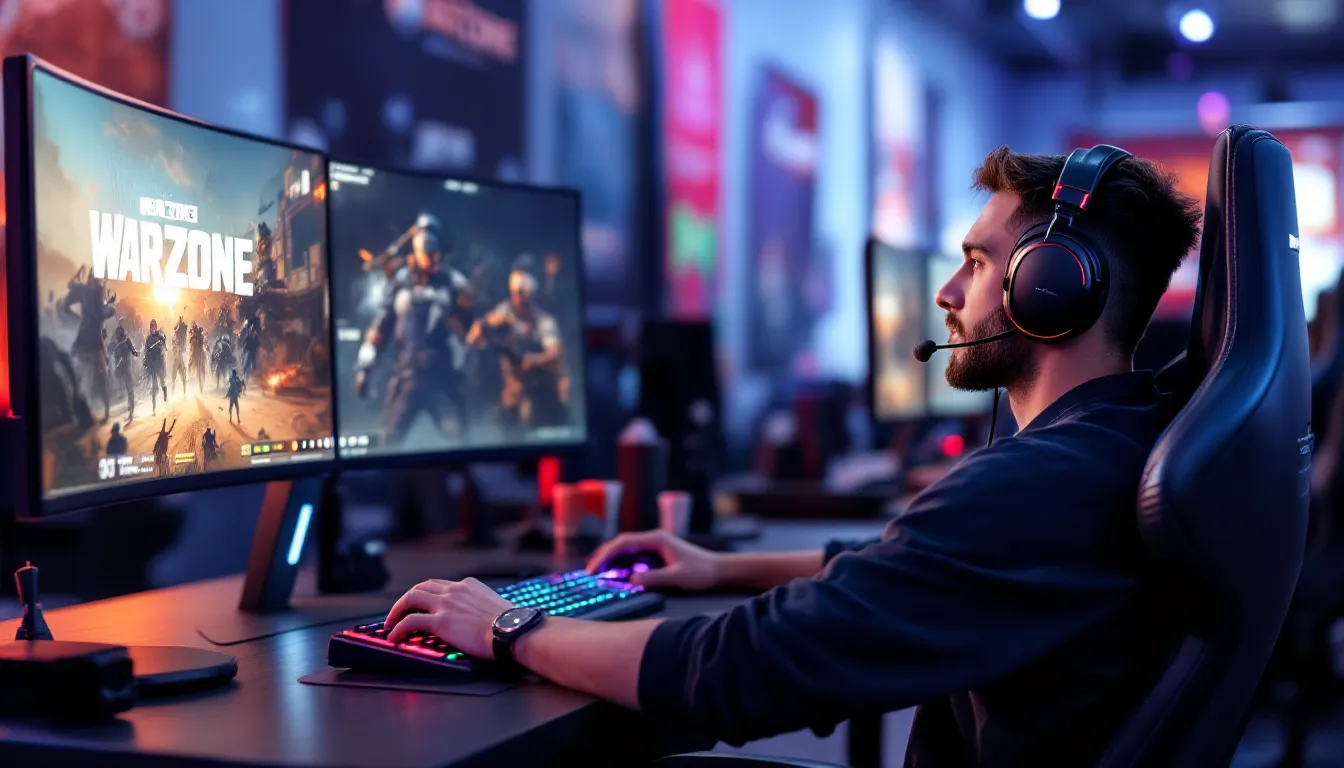
Albuquerque might not be the first city that comes to mind when you think about esports hotspots, but the local Warzone scene has been quietly building momentum for years. From grassroots LAN events at gaming cafes to organized online tournaments with real prize pools, the Duke City has carved out a niche for competitive Call of Duty players who want more than just pub stomping.
Whether you’re a grinder looking to join your first local tournament, a veteran player scouting for fresh teammates, or just curious about what’s happening in New Mexico’s gaming community, Albuquerque’s Warzone scene offers more than you’d expect. The city’s competitive landscape has evolved alongside the game itself, adapting through Verdansk, surviving Caldera, and thriving in the current iteration of battle royale chaos.
This guide covers everything from where to compete in person, how to plug into the local Discord servers, what tournaments are on the calendar for 2026, and the strategies that separate top-placing squads from the ones stuck spectating after the first circle. Let’s drop in.
Key Takeaways
- Warzone Albuquerque represents a thriving competitive gaming community with 300-400 active players hosting 15-20 tournaments annually, from weekly Discord scrims to major LAN events with prize pools exceeding $3,500.
- The local scene has evolved significantly since 2020, growing from pandemic-era online events to hybrid tournaments at venues like Quest Esports Arena and Cyber Mesa Gaming Lounge that attract regional talent.
- Key competitive tournaments include the Duke City Championship (spring and fall), the New Mexico State Warzone Open (November with $6,200+ prize pools), and monthly community events like ABQ Warzone Weekly.
- Success in Warzone Albuquerque requires mastering the current meta (RAM-9, SVA 545, and long-range weapons as of March 2026), strong team communication, and adaptation to tournament-specific rule sets and scoring formats.
- The scene is expanding through 2026 with planned boot camps, potential high school league partnerships, and efforts to diversify sponsorship and venue infrastructure to retain top talent and attract casual players into competitive brackets.
- Joining the Albuquerque Warzone community is accessible through Discord servers (ABQ Warzone, 505 Gaming Collective), open-play sessions at gaming cafes, and free-to-enter weekly tournaments that serve as entry points for new competitors.
What Is Warzone Albuquerque?
“Warzone Albuquerque” refers to the local competitive and community scene for Call of Duty: Warzone centered in Albuquerque, New Mexico. It’s not an official game mode or map, it’s shorthand for the network of players, tournaments, gaming venues, and online communities that make up the city’s Warzone ecosystem.
The term encompasses everything from weekly pickup matches organized through Discord to sanctioned LAN tournaments hosted at local esports venues. Players use “Albuquerque Warzone” to identify local competitions, distinguish themselves from out-of-state competitors, and build regional pride in a game that’s otherwise global and anonymous.
Unlike major metro scenes in LA, Dallas, or Chicago, Albuquerque’s Warzone community operates at a smaller scale, but that creates tighter bonds. Players recognize each other across multiple events, rivalries develop naturally, and newcomers get integrated faster than they would in oversaturated markets. The scene spans casual Friday night scrims to cash-prize invitationals, with skill levels ranging from .8 K/D hopefuls to multi-Demon lobbies.
It’s also a practical solution for New Mexico gamers who can’t justify flights to coastal majors but still want that competitive rush. Local tournaments offer lower barriers to entry, face-to-face networking, and the chance to rep your city against teams from neighboring states.
The History of Call of Duty Warzone Tournaments in Albuquerque
Early Esports Events in the City
Albuquerque’s competitive FPS roots predate Warzone by over a decade. The city saw scattered Counter-Strike 1.6 and Call of Duty 4 LAN events in the late 2000s, mostly organized by internet cafes trying to pull in weekend traffic. These early tournaments were small, eight to sixteen teams max, and prize pools rarely exceeded a few hundred bucks in cash or store credit.
When the original Warzone launched in March 2020, Albuquerque’s existing Call of Duty community was primed to jump in. A handful of organizers who’d run Black Ops 4 Blackout events pivoted immediately, leveraging Discord and Twitch to coordinate online-only competitions during the pandemic. The first “Albuquerque Warzone Invitational” happened in June 2020, a trios event with a $500 pot split across top three teams. Participation was regional but open, teams from Santa Fe, Las Cruces, and even El Paso registered.
Those early online tournaments established the core player base and organizer network that would carry the scene forward once in-person events became viable again in 2021.
Growth of the Local Warzone Scene
By mid-2021, Albuquerque’s Warzone scene began hosting hybrid events, online qualifiers feeding into in-person finals at gaming lounges. Cyber Mesa Gaming Lounge and Quest Esports Arena became regular hosts, running monthly tournaments with entry fees ranging from $10 to $50 per player depending on format.
The scene’s growth accelerated when local players started placing in regional qualifiers for larger tournaments. A trio from Albuquerque secured a top-16 finish in a Mountain West regional in early 2022, putting the city on the map for scouts and organizers. Prize pools grew accordingly, 2023 saw the first $2,000+ local event, and 2024 introduced sponsored tournaments backed by peripheral brands and energy drink companies.
Verdansk nostalgia keeps older players engaged, but the current Urzikstan map has attracted a fresh wave of competitors. The introduction of ranked Resurgence modes in late 2023 gave casual players a structured ladder to climb before committing to full tournament play, effectively widening the funnel into the competitive scene.
Today, Albuquerque hosts 15-20 Warzone tournaments annually, ranging from small weekly scrims to marquee seasonal championships. The player base hovers around 300-400 active competitors, with another thousand or so casual participants who drop in occasionally.
Major Warzone Events and Tournaments in Albuquerque
Local LAN Tournaments and Prize Pools
The biggest in-person event is the Duke City Warzone Championship, held twice a year (spring and fall) at Quest Esports Arena. The Spring 2026 edition featured a $3,500 prize pool split across quads format, with top eight teams earning payouts. Entry fee was $40 per player, and the event drew 28 teams, a record for the venue.
Format is typically kill-race across three to five matches, with placement points factored in using a modified scoring system similar to CDL rules. First place in Spring 2026 netted the winning squad $1,400, and they walked with custom trophies and sponsor swag from HyperX and Monster Energy.
Cyber Mesa Gaming Lounge runs a monthly series called Burque Battle Royale, quads format with $500-$800 pots depending on turnout. These events are more accessible for newer competitors, lower entry fees ($15/player), relaxed atmosphere, and bracket play instead of pure kill-race.
Smaller one-off LANs pop up at bars and community centers, often organized by local influencers or clan leaders. These rarely exceed $200 purses but offer good practice and networking.
Community-Hosted Competitions
Online tournaments dominate the weekly calendar. ABQ Warzone Weekly runs every Thursday night, hosted through a Discord server with 1,200+ members. It’s free to enter, trios format, and winners get bragging rights plus occasional peripherals donated by local PC shops.
505 Gauntlet is a monthly invite-only event for top-ranked local players, minimum 1.5 K/D to register. It’s essentially a proving ground for players eyeing regional qualifiers. The format rotates between solos, duos, and trios, and matches are streamed on Twitch with live commentary.
These community events serve as feeders for the bigger LANs, organizers scout talent, squads test chemistry, and the meta gets refined in real-time.
Seasonal and Annual Championship Events
Beyond the Duke City Championship, Albuquerque hosts the New Mexico State Warzone Open each November, technically a statewide event but anchored in Albuquerque. Teams from across NM compete for a $5,000+ prize pool (2025 edition hit $6,200 thanks to sponsor backing). This is the most prestigious local event and often features guest appearances from regional influencers and former CDL pros.
Summer brings the Warzone Desert Classic, a hybrid LAN/online event where out-of-state teams can compete remotely while local squads play in-person at the arena. It’s a smart workaround for budget constraints and travel logistics, and it’s helped Albuquerque teams measure themselves against talent from Phoenix, Denver, and SoCal.
Seasonal events tied to Warzone’s in-game updates, new map launches, major patches, tend to spike participation. When Urzikstan dropped, a pop-up tournament at Cyber Mesa pulled 18 teams on 48 hours’ notice.
Where to Play Warzone Competitively in Albuquerque
Gaming Cafes and Esports Arenas
Quest Esports Arena (4121 Cutler Ave NE) is the premier venue. They’ve got 40 gaming PCs with RTX 4070 setups, 240Hz monitors, and a dedicated LAN zone for tournaments. Open play is $8/hour, but tournament entry includes station time. The space hosts viewing parties for CDL majors and occasionally brings in coaches for workshops.
Cyber Mesa Gaming Lounge (5920 Holly Ave NE) is smaller but scrappier. They run 20 stations (mostly RTX 3060 Ti rigs) and focus on community over polish. Their staff are active players who’ll squad up with regulars between shifts. Open play is $6/hour, and they offer monthly memberships ($80) for grinders who show up three or more times a week.
Binary Battleground (downtown, Central Ave) opened in late 2025 and caters to the college crowd from UNM. They’ve got console setups plus to PCs, useful for mixed-platform squads. Their Warzone nights (Wednesdays) offer half-price station rentals and free entry to pickup tournaments.
All three venues have Discord servers where you can check schedules, reserve stations, and coordinate with other players. Weekend slots fill fast during tournament season, so book ahead.
Online Tournament Platforms for Local Players
Most Albuquerque players use Community Gaming (CMG) for wager matches and Checkmate Gaming (CMG’s sister platform) for structured ladders. These aren’t Albuquerque-exclusive, but local squads cluster in the Mountain timezone brackets, so you’ll often run into familiar names.
GameBattles still has a presence, especially for teams prepping for CDL Challengers qualifiers. The interface is clunky, but match verification is stricter than CMG, which matters when money’s on the line. According to coverage on competitive platform rankings, GameBattles remains a standard for serious teams even though newer alternatives.
Discord-based tournaments through ABQ Warzone Weekly and 505 Gauntlet use a mix of manual bracket management and bot-assisted check-ins. They’re free but require more trust, disputes happen, but the community largely self-polices.
For players exploring technical challenges in other maps, local organizers sometimes run throwback events on older Warzone versions for nostalgia or variety.
How to Join the Albuquerque Warzone Community
Discord Servers and Social Media Groups
The ABQ Warzone Discord (invite link pinned in Quest Esports Arena’s Instagram bio) is the central hub. It’s got channels for LFG (looking for group), tournament announcements, meta discussion, and trash talk. Moderators are active players who organize the weekly events and keep things from devolving into toxicity, mostly.
505 Gaming Collective is a broader New Mexico server covering multiple games, but the Warzone channel is active and well-moderated. Good for finding teammates outside the core ABQ scene or coordinating with Santa Fe/Las Cruces players.
Facebook groups like Albuquerque Warzone Players skew older (25-40 demographic) and focus more on casual squads and weekend warriors. Less tournament chatter, more memes and loadout debates.
Instagram is where local influencers and tournament organizers promote events. Follow @abqwarzone, @questesportsabq, and @cybermesagaming to stay current. Twitter is mostly dead for local scene updates, though some players still use it for callouts and clip posting.
Finding Teammates and Building Your Squad
Most teams form through LFG channels in Discord. Post your K/D, preferred role (IGL, fragger, support), availability, and goals (casual/competitive). Be honest about skill level, overselling leads to awkward lobby experiences.
Attending open-bracket tournaments solo is another solid route. Quest Esports Arena runs “free agent” nights where solo players get matched into random squads for the tournament. Chemistry either clicks or it doesn’t, but you’ll expand your network either way.
Ranked play is the proving ground. If you’re consistently hitting Crimson or Iridescent ranks, you’ll get noticed. Top players actively recruit from ranked leaderboards, and Discord DMs from squad-less talent are common during tournament registration windows.
Don’t sleep on the gaming cafes’ open play hours. Regulars form tight crews, and face-to-face gaming builds trust faster than online-only interactions. Show up consistently, carry your weight, and you’ll get invited to private scrims.
Tips for Competing in Albuquerque Warzone Tournaments
Mastering Meta Loadouts and Strategies
Albuquerque tournaments follow global meta closely, so you can’t get away with off-meta meme builds. As of March 2026, the RAM-9 and SVA 545 dominate close-to-mid range, while the XRK Stalker and KATT-AMR handle long-range duty. Most squads run two ARs, one SMG, and one sniper/marksman across a quad.
Practice your loadout on the same setup you’ll use at the venue. Quest and Cyber Mesa both use standard 1080p/240Hz monitors with wired mice, if you’re used to ultrawide or high FOV on PC at home, adjust beforehand. Input lag and refresh rate differences have ended plenty of tournament runs before they started.
Resource guides like those found on detailed weapon analysis platforms help refine builds, but local meta has quirks. Albuquerque players favor mobility over damage range because most LAN finals take place in Resurgence modes or shortened storm circles. Expect aggressive pushes and constant repositioning.
Study the scoring format before you register. Kill-race tournaments reward fragging over placement, so your squad needs a dedicated IGL calling rotations that maximize engagements without throwing lives away. Point-based formats require more conservative play and clutch discipline in final circles.
Communication and Team Coordination
In-person LANs get loud. Bring a decent headset with good isolation, you’ll be hearing callouts from three other teams within ten feet. Practice comms discipline: short, clear, actionable. “Two on me, gas station, cracked” beats a five-second explanation.
Assign roles pre-tournament and stick to them. IGL makes rotations and buy decisions, fragger takes point on pushes, support watches flanks and manages utility, flex fills gaps. Swapping roles mid-match causes hesitation, and hesitation gets you sent to the lobby.
Use ping systems aggressively even with voice comms. Albuquerque tournaments sometimes enforce “quiet periods” during final circles to reduce noise bleed between stations, so visual callouts matter.
Develop shorthand for common situations. Top local squads have coded calls for specific buildings, rotations, and positioning that save precious seconds. You don’t need military-grade tac speak, but “bedroom push” should mean the same thing to all four players.
Tournament Preparation and Mental Game
Play scrims on tournament ruleset at least a week before the event. ABQ Warzone Weekly offers good practice, but private scrims against other registered teams give better preparation. Most squads coordinate these through Discord DMs.
Sleep matters more than last-minute practice. LAN events run 4-6 hours with minimal breaks, if you’re running on three hours of sleep and four energy drinks, you’ll tilt by match three. Hydrate, eat real food, and show up rested.
Mental reset between matches separates top performers from mid-table finishes. Bad RNG happens, you get zone-screwed, third-partied, or sniped off a buy. Shake it off, review what you controlled (positioning, comms, decision-making), and queue the next one.
Study competitors. Most Albuquerque regulars stream or post clips. Watch their rotations, note their aggression patterns, and anticipate their tendencies. The local scene is small enough that you’ll face the same squads repeatedly, exploit that familiarity.
According to insights from competitive strategy breakdowns, top-tier teams spend as much time reviewing VODs as grinding matches. Record your tournament games and debrief with your squad afterward, win or lose.
Notable Players and Teams from the Albuquerque Scene
NM Reapers is the longest-running competitive squad, formed in 2020 and still fielding a top-three roster in most local events. Their IGL, “KiloKing505,” holds multiple Duke City Championship titles and has a 2.1 K/D in ranked play. The squad placed top 32 in a 2024 regional qualifier, the best showing for an Albuquerque-based team in a national bracket.
Desert Demons emerged in 2023 and quickly became the Reapers’ main rival. They specialize in aggressive Resurgence play and took first at the Fall 2025 Duke City Championship. Their fragger, “SaguaroSnipes,” streams regularly on Twitch (around 300 concurrent viewers) and provides unofficial coaching to newer players through Discord.
ABQ Apex is a newer squad (formed early 2025) but they’re stacked with former ranked grinders. Three of their four players hit Top 250 on the solos leaderboard during Season 2 Ranked, and they’ve got the mechanical skill to hang with anyone in the state. Still working out team synergy, but they’re the dark horse for 2026 events.
Individual standouts include “GhostPepper_NM” (1.9 K/D, clutch specialist known for 1v3 endgame heroics), “ZiaWarrior” (oldest active competitor at 38, founding member of the scene), and “RoswellRaze” (cracked teenager who’ll probably get picked up by a regional org if he keeps improving).
Albuquerque doesn’t have CDL-level talent yet, but several players have competed in Challengers qualifiers and a handful stream with small but loyal audiences. The scene punches above its weight given the city’s size.
The Future of Warzone Esports in Albuquerque
Upcoming Events and Opportunities in 2026
The Spring Duke City Championship already happened in March with record turnout. Next major event is the Summer Warzone Desert Classic in July, which organizers are expanding to include a college bracket, UNM, CNM, and NM State students compete for scholarships and gear sponsored by local tech companies.
New Mexico State Warzone Open is locked in for November 9-10, 2026, and rumors suggest the prize pool could hit $8,000+ if current sponsor negotiations close. There’s also talk of a streaming partnership with a regional network, which would bring production value and exposure beyond the usual Twitch channels.
Quest Esports Arena is planning a boot camp series starting in May, weekend intensives with coaching from former semi-pro players, VOD review sessions, and scrimmage blocks. $150 for the two-day program, and it’s aimed at intermediate players looking to break into top tournament brackets.
Cyber Mesa is exploring a high school league in partnership with APS (Albuquerque Public Schools), which could funnel younger talent into the competitive pipeline. Approval is pending, but if it launches in Fall 2026, it’ll double the player base within a year.
How the Scene Can Continue to Grow
Sponsorship diversification is key. Right now most funding comes from peripheral brands and energy drinks, but local businesses, breweries, car dealerships, tech startups, could step in if events demonstrate ROI through social media reach and attendance.
Venue expansion or a dedicated esports facility would legitimize the scene. Quest and Cyber Mesa are great, but neither was built for esports from the ground up. A purpose-built 100+ seat arena with pro-grade equipment, soundproof booths, and broadcast infrastructure would put Albuquerque on the map for regional qualifiers and invitational events.
Cross-game collaboration could pull in adjacent communities. Apex Legends, Valorant, and Fortnite have local presence, combined events or shared prize pools might justify larger venues and sponsorships.
Talent retention matters. When local players get good enough, they often relocate to Texas or California for better opportunities. Building pathways to semi-pro play within New Mexico, whether through streaming support, coaching gigs, or org partnerships, keeps top talent engaged locally.
Finally, onboarding casual players into the competitive funnel needs work. Ranked play helps, but beginner-friendly tournaments with skill brackets and coaching components would convert more pub players into tournament regulars. The scene’s health depends on constant influx at the bottom of the skill pyramid.
Conclusion
Albuquerque’s Warzone scene isn’t flashy, but it’s real. The tournaments are well-run, the community is welcoming (once you prove you’re not a rager), and the competition is legitimate enough to sharpen your skills without requiring cross-country travel.
Whether you’re hunting your first LAN trophy, building a squad for regionals, or just tired of randoms who won’t buy you back, the infrastructure exists. Show up to a tournament, drop into the Discord, or hit open play hours at one of the venues. The Duke City’s got a spot for you, just bring your comms and don’t blame the lag.
About The Author