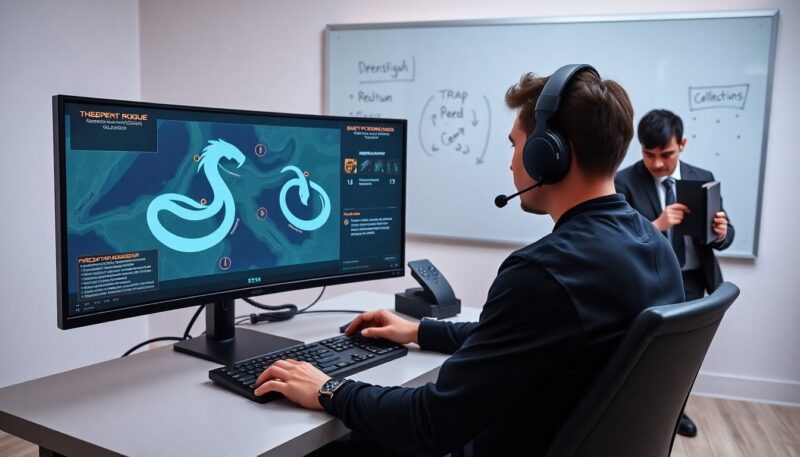
Today’s digital casino experience is built on two very different types of technology. On one side, there are virtual slot games powered by complex mathematical algorithms. On the other, live dealer tables rely on high-definition video streaming and real-time broadcasting. Although both appear seamless on your screen, they operate in completely different ways behind the scenes.
Every spin and every dealt card depends on sophisticated infrastructure designed to deliver fair, secure and near-instant gameplay. Looking beyond the interface reveals just how far data processing, encryption and live transmission technology have evolved within the modern casino industry.
The Mathematical Engine Behind Digital Slots
The main component of contemporary digital slots is an RNG, a technology designed to create random number sequences every millisecond. As soon as the user activates a game, this technology turns these numbers into symbols on the reels.
Thanks to low data consumption, slot machines are fast and responsive even when played over a slow mobile Internet connection. Instead of receiving bulky information packages, the machine receives only the result of each spin.
As a consequence, the casino session runs smoothly and does not place too high a requirement on the user’s Internet connection speed. Besides, since each new number sequence is generated independently, each spin does not depend on the earlier ones. This feature enables playing slots without delays.
Moreover, owing to the lightweight nature of the technology used, developers can implement graphic elements, animation and sound effects, which do not influence the performance. Thanks to constant improvements in smartphones and Internet networks, visual quality can keep improving without affecting response speed.
Seamless Access to Specialized Gaming Systems
Before exploring these different casino technologies, completing a Betway register process provides access to the available titles. When you use a secure Betway register portal, the platform establishes an encrypted connection between your device and its casino servers, helping protect account information and gameplay data throughout the session.
This registration process acts as the bridge between your device and the systems that calculate game outcomes in real time. Once you complete the Betway register sequence, you can browse both automated games and live-streamed tables through the same platform.
The streamlined onboarding process allows users to move from browsing to playing with minimal delay while maintaining secure connections.
Understanding the Technology Behind Live Dealer Tables
Live dealer games work very differently from digital slots. Instead of generating outcomes through software alone, they rely on high-definition, low-latency video streams that recreate the atmosphere of a physical casino floor.
Specialized studios broadcast continuous live video while Optical Character Recognition (OCR) technology tracks every physical card dealt and every spin of the roulette wheel. The OCR software instantly converts these real-world actions into digital information, allowing the interactive interface to update in real time.
The technology typically includes:
- High-definition cameras capturing multiple viewing angles simultaneously.
- Physical smart tables equipped with built-in sensors and RFID readers.
- Hardware control systems that encode and transmit video with minimal delay.
Together, these technologies allow you to watch every action as it happens. The continuous synchronization between physical gameplay and the digital interface creates a level of transparency that differs from traditional software-based games.
Different Network Demands, Different Solutions
The contrasting technologies behind slots and live tables also create very different network requirements.
RNG-powered slot games transmit only small amounts of numerical data, allowing them to perform well even on slower internet connections. Live dealer games, however, continuously stream high-definition video, requiring a faster and more stable connection to avoid buffering or noticeable delays.
To manage these demands, operators use several networking technologies, including:
- Adaptive bitrate streaming that automatically adjusts video quality according to your connection speed.
- Global Content Delivery Networks (CDNs) and edge servers that reduce the distance between the video source and the viewer.
- Optimized web protocols that keep video, audio and betting activity synchronized.
These systems work together behind the scenes, automatically adjusting video quality as network conditions change. The goal is to maintain uninterrupted gameplay without requiring manual adjustments.
Maintaining Fairness Through Independent Oversight
Regardless of whether one uses mathematical algorithms or physical equipment, both approaches are governed by strict rules to ensure the reliability and fairness of the process.
RNG programs are regularly tested in independent laboratories to verify that the results are random and comply with gaming regulations. In addition to this, special attention is paid to live casinos where not only the software but also the equipment, dealers and optical character recognition are checked.
Thus, these regular evaluations ensure that results do not change, regardless of whether they were obtained using mathematical algorithms or a physical roulette. Such monitoring will help identify potential technical problems and prevent them from affecting the game in any way.
This is especially important since the performance of games must be ensured in various conditions.
In this way, one can see that certified software systems and live casino environments are two technological pillars of modern casinos. With improvements in digital infrastructure, loading speed, video stream quality and interface performance will improve further in the future.
About The Author