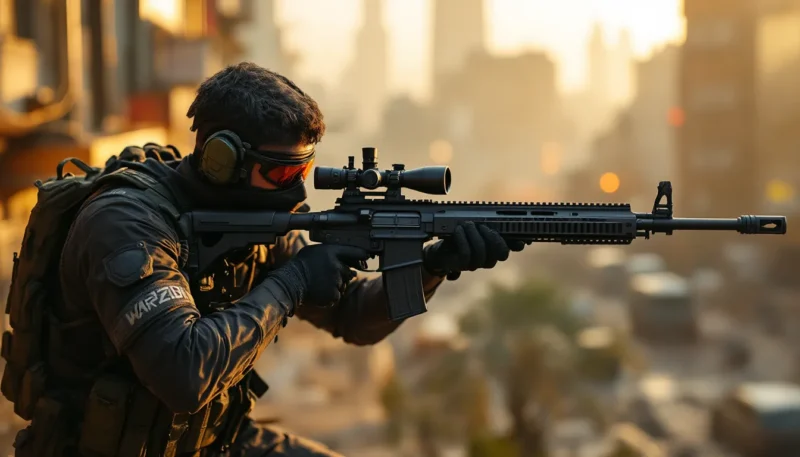
Light machine guns have always occupied a unique space in Warzone’s weapon hierarchy. They’re the tools that turn coordinated squads into suppression machines and transform defensive positions into fortresses. But in early 2026, with the meta shifting after the Season 2 Reloaded patch, LMGs have clawed their way back into mainstream loadouts across Battle Royale and Resurgence modes alike.
Whether you’re laying down cover fire to revive a teammate, shredding vehicles before they can rotate, or simply refusing to reload during a chaotic third-party scenario, the right LMG can be the difference between a squad wipe and a trip back to the lobby. This guide breaks down the five best LMGs in Warzone right now, complete with optimal loadouts, tactical applications, and the attachments that separate meta picks from vault fodder.
Key Takeaways
- The best LMG Warzone options like the Pulemyot 762 combine AR-level handling with 100+ round capacity, providing sustained suppression and magazine depth that assault rifles cannot match.
- Season 2 Reloaded buffs to ADS speed and mobility have made LMGs viable for aggressive playstyles beyond traditional defensive anchor roles.
- Success with LMGs depends on strategic positioning, controlled burst discipline, and proper attachment selection—avoid over-committing to fights and maintain reload discipline behind hard cover.
- LMGs excel in squad-based scenarios where one player anchors positions with suppressive fire while teammates handle close-range gaps and aggressive pushes.
- The optimal LMG loadout pairs your primary with a fast-handling SMG secondary (Lachmann Sub, Fennec 45, or ISO 45) to cover weaknesses in close-quarters combat.
Why LMGs Are Essential in Warzone’s Current Meta
The Season 2 Reloaded balance update recalibrated weapon classes in ways that quietly favored LMGs. Assault rifles took modest damage range nerfs, sniper rifles saw flinch adjustments, and tactical rifles lost some of their mid-range dominance. LMGs, meanwhile, received targeted buffs to ADS speed and mobility stats that had historically kept them out of aggressive playstyles.
Magazine capacity remains the defining strength. While ARs top out around 60 rounds with extended mags, LMGs routinely pack 100+ rounds without sacrificing damage per bullet. In squad-based engagements, that capacity translates to sustained pressure that forces opponents to disengage or burn through armor plates at unsustainable rates.
Suppression mechanics matter more than players realize. When bullets crack past an enemy’s head, their screen shakes and ADS stability drops. LMGs excel at creating suppression lanes that deny rotations, pin squads inside buildings, or cover objective plays in modes like Plunder. Competitive teams have started running dedicated LMG players for late-circle positioning, especially in tournaments where every rotation counts.
Vehicle destruction is another underrated role. A single LMG can shred a Cargo Truck or Tactical Vehicle in seconds, countering the vehicle-heavy strategies that plagued earlier seasons. The Pulemyot 762 and Bruen Mk9, in particular, melt armor plating on SUVs faster than any AR in the game.
Mobility improvements have closed the gap with mid-weight ARs. The March 2026 patch reduced sprint-to-fire times by 8-12% across most LMGs, and movement speed penalties dropped by roughly 5%. Players can now run LMGs as primary weapons without feeling like they’re wading through mud. That shift has opened aggressive playstyles, especially in Resurgence modes where fast repositioning matters.
The 5 Best LMGs in Warzone Right Now
Here’s the definitive ranking based on Season 2 Reloaded performance, cross-referenced with pick rates from competitive tournament data and community feedback from high-level players.
#1: Pulemyot 762 – The Meta King
The Pulemyot 762 dominates for one simple reason: it combines AR-level handling with LMG firepower. Its base TTK (time to kill) sits at 612ms out to 40 meters with chest shots, faster than the STG44 and comparable to the SVA 545. The JAK Annihilator Bullpup Kit conversion transforms it into a hybrid weapon that maintains 100-round default mags while cutting ADS time to 310ms.
Key Stats:
- Damage: 32 chest / 24 limb
- Fire Rate: 652 RPM
- Effective Range: 42 meters (first dropoff)
- ADS Speed: 310ms (with meta build)
This gun shines in medium-to-long-range fights where you can leverage the mag size to chain kills without reloading. The recoil pattern climbs vertically for the first 15 rounds, then settles into a tight grouping. Players who learn the initial kick can beam targets at 60+ meters with minimal compensation.
#2: Bruen Mk9 – Superior Fire Suppression
The Bruen Mk9 returned to relevance after a March update reduced its horizontal recoil by 18%. It’s the suppression king, 60-round mags fire at 909 RPM, creating a bullet hose effect that makes peeking impossible. The Bruen Heavy Support Grip and XRK Horizon V2 Barrel turn it into a laser beam with almost zero vertical climb after the first ten shots.
Key Stats:
- Damage: 28 chest / 21 limb
- Fire Rate: 909 RPM
- Effective Range: 38 meters
- ADS Speed: 395ms
Use this for holding power positions in Battle Royale. Plant on a headglitch overlooking a buy station or circle edge, and opponents simply can’t challenge. The faster fire rate means more suppression ticks per second, and the controllable recoil lets you track moving targets through smoke or dust.
#3: RPK – Best for Beginners
The RPK offers the gentlest learning curve. Its iron sights are clean, recoil is predominantly vertical with minimal bounce, and damage falloff doesn’t start until 45 meters. New players can attach the VLK 4.0x Optic and Aim-Op V4 Laser without sacrificing much mobility, making it forgiving in both long-range poke fights and closer scrambles.
Key Stats:
- Damage: 30 chest / 23 limb
- Fire Rate: 625 RPM
- Effective Range: 45 meters
- ADS Speed: 360ms
It won’t win pure DPS races against the Pulemyot, but it’s consistent. The 75-round default mag is large enough for most engagements, and the weapon handles predictably even when hipfiring in building interiors. For players transitioning from ARs, the RPK feels familiar without demanding mastery of complex recoil patterns.
#4: DG-58 LSW – Mobility and Power Combined
The DG-58 LSW splits the difference between tactical rifles and traditional LMGs. It fires in controllable bursts at 535 RPM, but each bullet hits for 34 damage to the chest. With the Commando Foregrip and Field Agent Grip, players can land consecutive bursts at ranges where full-auto LMGs start to spray.
Key Stats:
- Damage: 34 chest / 26 limb
- Fire Rate: 535 RPM
- Effective Range: 50 meters
- ADS Speed: 340ms
This excels in Resurgence modes where mobility matters. The lighter frame allows faster slide-cancels and mantling, and the burst mechanic conserves ammo during isolated 1v1s. Experienced players pair it with aggressive movement, using the high per-bullet damage to win peek fights before enemies can return full-auto volume.
#5: HCR 56 – Long-Range Laser Beam
The HCR 56 barely qualifies as mobile, but nothing touches its long-range precision. With the Harbinger D20 Barrel and Corio Eagleseye 2.5x Optic, it becomes a pseudo-sniper support weapon. Recoil is almost nonexistent past 20 rounds, and the 110-round belt lets you sustain fire on distant targets without worrying about reload timing.
Key Stats:
- Damage: 29 chest / 22 limb
- Fire Rate: 698 RPM
- Effective Range: 55 meters
- ADS Speed: 425ms
Deploy this in squads where another player handles close-range duties. The HCR thrives when mounted on cover or posted in a window, shredding players rotating across open ground. It’s slow to swap and punishing if caught off-guard, but in the right hands, it controls entire zones of the map.
Best LMG Loadouts and Attachments
Attachments make or break LMG performance. Here’s how to optimize each category for maximum effectiveness across the top-tier options.
Optics and Sights for LMG Builds
Optic choice depends on engagement range and personal preference. For Battle Royale, the Corio Eagleseye 2.5x offers the best balance, enough zoom for mid-to-long pokes without tunnel vision. The VLK 4.0x Optic remains popular for players who prioritize a wider field of view and cleaner reticle.
In Resurgence, iron sights or reflex optics like the Slate Reflector keep peripheral vision intact. The faster pace demands situational awareness over magnification. Exception: the HCR 56 still wants a 2.5x minimum because it’s built for range.
Pro tip, avoid high-zoom optics (3.5x+) unless you’re running a dedicated support role. LMG handling already limits close-quarters viability: stacking a slow optic makes weapon swaps the only option when enemies push.
Barrels, Stocks, and Underbarrels for Recoil Control
Recoil management comes down to three attachment slots working in concert. Barrels typically add range and bullet velocity but increase ADS time. For the Pulemyot 762, the JAK Annihilator Long Barrel extends effective range to 48 meters with only a 25ms ADS penalty. The Bruen Mk9 benefits from the XRK Horizon V2, which tightens grouping without destroying mobility.
Underbarrels handle the vertical and horizontal components. The Commando Foregrip reduces side-to-side bounce on weapons like the DG-58 LSW, while the Operator Foregrip cuts vertical climb on high-RPM guns. The Bruen Mk9 pairs best with the Bruen Heavy Support Grip, which was specifically designed to counteract its natural recoil tendencies.
Stocks adjust movement and ADS speed. The FT Mobile Stock on the RPK shaves 40ms off ADS while keeping recoil manageable. The Corio Precio Factory stock for the Pulemyot improves sprint-to-fire time, critical for aggressive players who need to snap onto targets mid-rotation.
Balance is key, dumping every slot into recoil control leaves you sluggish and vulnerable. Most optimal builds use two recoil-focused attachments (barrel + underbarrel) and dedicate remaining slots to handling or optics. Some players have found success with the best Bren loadout philosophy, which emphasized mobility over pure beam potential.
Ammunition and Magazine Choices
Most meta LMGs run default mags because base capacity already exceeds 75 rounds. The exception is the Bruen Mk9, where the 60 Round Mag actually improves ADS speed by 30ms compared to the 100-round belt, with minimal capacity sacrifice for Resurgence modes.
High Velocity Ammo adds 15% bullet velocity, shrinking lead times at distance. It’s essential for the HCR 56 and recommended for any LMG used past 40 meters. The trade-off, minor damage range reduction (usually 2-3 meters), is negligible in practical play.
Avoid Armor Piercing Rounds unless you’re specifically countering vehicle-heavy lobbies. The damage boost to equipment doesn’t justify the reduction to player health damage. Subsonic Ammo sounds appealing for staying off radar, but the velocity penalty makes long-range tracking inconsistent.
How to Use LMGs Effectively in Different Game Modes
LMG tactics shift dramatically between Battle Royale’s methodical pacing and Resurgence’s chaotic respawn loops. Here’s how to adapt your approach.
Battle Royale: Positioning and Suppression Tactics
In standard Warzone, positioning trumps mechanics. LMGs shine when you claim power positions early and force opponents to challenge uphill. Identify natural choke points, stairs in multi-story buildings, bridges between zones, rock formations overlooking rotations, and post up.
Once positioned, use suppression to deny space rather than chase kills. If a squad is rotating from gas, you don’t need to wipe them. Forcing them into awkward cover or burning their plates accomplishes the same goal. The Pulemyot 762 excels here because its magazine lets you fire in sustained 20-30 round bursts without worrying about running dry mid-fight.
Mounting multiplies effectiveness. Whether on a window ledge, vehicle hood, or deployable cover, mounted LMGs gain massive recoil reduction and flinch resistance. The HCR 56 goes from serviceable to oppressive when mounted, turning into a legitimate sniper deterrent.
Late circles demand patience. As the gas closes, position near the edge and watch for teams forced to move. LMGs punish players caught in the open with nowhere to heal. Don’t overcommit to kills, sometimes pinning a squad outside the zone and letting gas do the work is smarter than pushing.
Communication matters more with LMGs than other weapon classes. Let teammates know when you’re reloading (even with 100-round mags, it happens). Coordinate pushes around your suppression, while you’re laying fire, they advance to better angles.
Resurgence: Aggressive LMG Strategies
Resurgence flips the script. Respawn mechanics mean you can afford riskier plays, and map design encourages close-to-mid engagements. The DG-58 LSW and RPK handle this pace better than slower options.
Use LMGs as zone control tools around high-traffic areas. If your team secures the Headquarters building on Rebirth Island, plant yourself watching the zip line or stairwell. Opponents respawning have limited options, and a pre-aimed LMG shuts down their entry points.
Pre-firing becomes viable with deep magazines. If you hear footsteps behind a door or wall, start firing before they appear. You’ve got 80+ rounds to spare, and the suppression effect limits their ability to return accurate fire even if you miss initial shots.
Pairing LMGs with UAVs creates devastating synergy. Knowing enemy positions lets you pre-aim corners and hallways, negating the ADS speed disadvantage. Pop a UAV, identify targets, and lay into their cover before they realize you’re there. Coordinating with optimal loadout builds across your squad amplifies this strategy further.
Rotation timing matters, don’t sprint across open courtyards with an LMG equipped. Plan movements between cover, swap to your secondary (SMG or pistol) during exposed sprints, then redeploy the LMG once you reach the next position. The mobility nerfs, even after recent buffs, still make LMGs punishing when caught mid-rotation.
LMG vs. Assault Rifle: When to Choose What
The LMG-versus-AR debate comes down to playstyle and squad composition. Neither is objectively superior: they serve different tactical niches.
Choose an LMG when:
- Your squad needs dedicated suppression and area denial
- You’re playing anchored roles in Battle Royale (holding buildings, covering rotations)
- Vehicle destruction is a priority
- You have teammates covering close-range gaps
- Circle positioning allows you to set up before engagements
Choose an AR when:
- You need to take multiple isolated fights quickly
- Mobility and rotation speed are critical (solo queue, aggressive squads)
- You’re flexing between ranges constantly
- ADS speed and weapon swap times matter more than mag depth
- Playing solo modes where you can’t rely on teammates to cover weaknesses
In squad play, running one LMG with three ARs or SMG hybrids creates balanced firepower. The LMG player anchors defensive positions and provides covering fire, while AR players handle aggressive pushes and flanks. Two LMGs per squad works in specific scenarios, final circles with strong natural cover, or objective-based modes where you’re defending fixed points.
Overkill considerations matter. If you’re running an LMG as your primary, your secondary needs to cover close quarters. The Lachmann Sub, ISO 45, or Fennec 45 fill that gap. Conversely, if you’re running an AR primary, adding an LMG secondary makes less sense due to role overlap. Better to carry a sniper or shotgun.
Recent meta shifts have seen some competitive teams experiment with LMG-sniper combos, using the LMG for sustained mid-range pressure and a sniper for one-shot kill potential. It’s niche, but viable if your squad covers close-range duties.
Don’t sleep on situational swaps. Grab an LMG from a loadout drop mid-game if you’ve secured a strong building and need to hold it. Conversely, if you started with an LMG and the circle forces open-ground rotations, pivot to an AR for the mobility. Adapting your loadout to circle position and remaining squads is a skill that separates good players from great ones.
Perks, Equipment, and Secondary Weapons for LMG Loadouts
LMG loadouts demand specific perks and equipment to offset inherent weaknesses and amplify strengths.
Best Perks to Complement Your LMG
Perk 1: Overkill remains essential unless you’re picking up a ground loot secondary. Pairing your LMG with an SMG gives you options when enemies push inside your effective range. Once you’ve grabbed your loadout, consider swapping to Double Time on a second loadout to improve tactical sprint duration, helpful when repositioning with heavy weapons.
Perk 2: Fast Hands (or equivalent depending on current Warzone version) cuts weapon swap speed by 30%. LMGs have notoriously slow swap times, and this perk makes transitioning to your secondary far less punishing. Alternative option: Focus, which reduces flinch when taking damage. Since LMG users often expose themselves during sustained fire, flinch resistance keeps you on target when opponents shoot back.
Perk 3: Tempered accelerates plate application, getting you back in fights faster after taking damage. LMG players tend to hold positions longer, making efficient plate usage critical. Spotter also has merit, highlighting enemy equipment through walls and letting you pre-fire trophy systems or claymores before pushing.
Perk 4: High Alert provides situational awareness that compensates for reduced mobility. Knowing when enemies are looking at you gives precious seconds to pre-aim or reposition. Alternatively, Bird’s Eye (if available in current season) shows enemy direction on radar, synergizing with the LMG’s role as an information anchor for your squad.
Experienced players running customized loadout strategies often adjust perk packages based on lobby aggression and game mode, swapping survivability perks in passive lobbies for tempo perks in aggressive ones.
Ideal Secondary Weapons and Tactical Equipment
Your secondary must handle what your LMG can’t: close-quarters lethality and fast target acquisition.
Top SMG pairings:
- Lachmann Sub – fastest sprint-to-fire, melts in tight spaces
- ISO 45 – underrated hipfire accuracy, 50-round mag covers multi-kills
- Fennec 45 – highest fire rate, delete enemies in under 400ms inside 10 meters
Some players prefer the WSP Swarm for its versatility, functioning as a pseudo-AR with the right attachments while maintaining SMG handling. In modes like Resurgence where building fights dominate, players familiar with SMG meta evolution tend to favor higher fire rates over range.
Pistols work if you’re confident in primary weapon play and want a second perk package. The P890 and X13 Auto serve as last-resort options when caught reloading, but they’re inferior to dedicated SMGs in most scenarios.
Tactical Equipment should support your positional playstyle. Stun Grenades let you push enemies out of cover after suppressing them. Snapshot Grenades reveal positions before committing to a spray, saving ammo and giving you target priority intel.
Lethal Equipment choices lean defensive. Claymores watch your flanks while you’re ADS holding an angle. Proximity Mines cover stairwells and doorways in buildings you’re defending. Offensive options like Semtex work, but LMG players usually aren’t the ones leading pushes where cooked grenades matter most.
Common LMG Mistakes and How to Avoid Them
Even experienced players fall into traps when running LMGs. Here are the most frequent errors and their fixes.
Mistake #1: Over-committing to fights. LMG capacity encourages players to keep firing long after they should disengage. Just because you have 70 rounds left doesn’t mean you should challenge a full squad solo. Fire in controlled bursts, assess the situation, and reposition if you’re not getting kills or your teammates can’t capitalize.
Fix: Set mental round limits. If you’ve fired 40+ rounds without securing a down, disengage and reassess. The enemy probably has better cover or angles than you anticipated.
Mistake #2: Poor pre-aiming discipline. LMGs punish players who ADS only after seeing an enemy. The slow handling means opponents get first shots, and flinch throws off your return fire.
Fix: Pre-aim common angles and pathways. If you’re watching a doorway or rotation route, stay ADS or use tactical sprint only in safe moments. Mounting whenever possible negates much of the handling disadvantage.
Mistake #3: Running LMGs in inappropriate situations. Trying to entry frag with an HCR 56 or solo pushing a building with a Pulemyot gets you killed. LMGs have defined roles: fighting outside those roles means playing with a handicap.
Fix: Match your weapon to your squad’s strategy and your position in the formation. If you’re running solo or playing entry, swap to an AR or SMG. Save LMG play for when you have teammates covering gaps.
Mistake #4: Ignoring reload timing. Even with 100-round mags, reloads happen. LMG reload animations are lengthy (often 5-7 seconds), leaving you vulnerable. Players often reload immediately after kills without clearing the area, then get caught by third parties.
Fix: Reload behind hard cover or after confirming no immediate threats. Swap to your secondary if you need to move quickly after a fight rather than standing still through a reload animation. Recent tactical discussions have emphasized reload discipline as a separating factor in high-level play.
Mistake #5: Neglecting ammo management. With large mags, players spam fire at anything that moves. You’ll burn through ammo boxes fast, and in late-game situations with limited loot, running dry is a death sentence.
Fix: Treat each burst purposefully. You don’t need to dump 30 rounds into a player behind a headglitch. Controlled 10-15 round bursts accomplish suppression while conserving ammo. Loot ammo boxes aggressively mid-game to stay stocked.
Mistake #6: Static positioning. Mounting and holding angles is effective, but staying in one spot too long telegraphs your location. Opponents will pre-fire, nade spam, or simply avoid your sightline.
Fix: Rotate within your position every 20-30 seconds. If you’re in a building with multiple windows, cycle between them. Same angle, different window, keeps enemies guessing and prevents them from setting up perfect counter-angles. Analysis from competitive coverage consistently shows top teams rotating anchors rather than camping single spots.
Conclusion
LMGs in Warzone have evolved past their old reputation as clunky support weapons. The Season 2 Reloaded changes brought them into viability for aggressive and defensive playstyles alike, with options ranging from the mobile Pulemyot 762 to the laser-accurate HCR 56. Success comes down to understanding each weapon’s strengths, building loadouts that compensate for weaknesses, and adapting tactics to game mode and squad composition.
Whether you’re laying suppressive fire in Battle Royale final circles or locking down Resurgence spawn points, the right LMG with proper attachments turns you into a force multiplier for your team. Master the fundamentals, positioning, burst discipline, reload timing, and these weapons reward you with sustained pressure that few opponents can match.
The meta will shift again, as it always does. But the core principles of LMG play, area denial, mag depth, and suppression, remain constant. Build your skills around those pillars, and you’ll stay effective no matter what balance changes the next patch brings.
About The Author