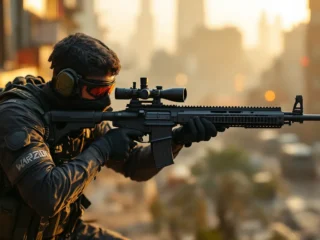
Shotguns in Warzone have always been divisive. Some players swear by them for clearing buildings and winning those heart-pounding interior fights, while others wouldn’t touch one with a ten-foot pole. But here’s the thing: in the right hands, with the right setup, shotguns can absolutely shred. They turn tight corridors into death traps and give you the upper hand when enemies push carelessly.
The meta shifts constantly, and shotguns are no exception. Recent patches have tweaked damage ranges, pellet spread, and fire rates, shuffling the hierarchy of which boomsticks deserve a spot in your loadout. Whether you’re hunting for that perfect one-shot kill or need something fast enough to handle multiple pushers, the shotgun landscape in 2026 offers more viable options than ever before. This guide breaks down the best shotguns in Warzone right now, the attachments that maximize their potential, and the strategies that’ll help you actually win those close-range duels instead of ending up on a killcam.
Key Takeaways
- The best shotgun in Warzone depends on your playstyle: the Lockwood 680 dominates for one-shot ambush tactics, the Haymaker excels for aggressive multi-target spraying, and the Expedite 12 prioritizes mobility for rotations.
- Shotguns are most effective in tight spaces like multi-story buildings, urban compounds, and underground tunnels where enemies cannot maintain range advantage—avoid open fields where long-range weapons dominate.
- Proper attachment builds transform shotguns from adequate to dominant: tight pellet spreads, faster ADS times, and mobility improvements are critical for consistent eliminations.
- Shotgun positioning and discipline matter more than mechanical skill; pre-aiming doorways, holding angles, and letting enemies come to you maximize your one-shot potential while minimizing vulnerability.
- Pair your shotgun with a versatile assault rifle or sniper using the Overkill perk to cover all engagement ranges—this hybrid strategy keeps you effective from close quarters to mid-distance fights.
Why Shotguns Matter in Warzone’s Current Meta
The warzone shotgun meta is alive and surprisingly healthy. With SMGs dominating the close-range conversation for months, shotguns had fallen into niche territory, until recent balance changes brought them roaring back.
TTK (time-to-kill) is the name of the game. In buildings, stairwells, and tight corners, nothing beats the instantaneous deletion power of a well-placed shotgun blast. While SMGs require tracking and multiple shots, a single pump from the Lockwood 680 or a burst from the Haymaker can end fights before they start. That fraction of a second matters when two players round a corner simultaneously.
Shotguns also punish overconfident pushers. The current meta rewards aggressive movement, slide cancels, bunny hops, and relentless pressure. But that aggression becomes a liability when you’re charging into a player posted up with a shotgun. The psychological impact alone can shift engagements: enemies who know you’re packing a one-shot weapon often hesitate or make positioning mistakes.
Map design plays into this too. Verdansk is gone, but the current rotation features plenty of multi-story buildings, tight compound layouts, and urban zones where shotguns thrive. These aren’t just early-game weapons anymore. Skilled players are carrying them deep into circles, especially when final zones collapse around buildings or cover-heavy terrain.
Finally, shotguns pair beautifully with assault rifles and long-range options. The Overkill perk lets you cover two ranges without compromise. Run an AR or sniper for open ground, swap to your shotgun when things get close, and you’ve got answers for every situation. That versatility is why top-tier loadout strategies often include at least one close-range specialist option.
Top 5 Best Shotguns in Warzone Right Now
Not all shotguns are created equal. Some promise one-shot glory but whiff when it matters. Others spray pellets like a garden hose but lack the damage to finish anyone with full plates. Here are the five shotguns actually worth your time in 2026.
1. Lockwood 680 – The One-Shot King
The Lockwood 680 remains the gold standard for pump-action lethality. This thing can delete a fully-plated opponent in a single trigger pull if you’re within its sweet spot, roughly 6-8 meters with the right attachments.
Why it’s top-tier: Consistency. While other shotguns can one-shot, the Lockwood does it reliably. The pellet spread is tight enough that even slightly off-center shots still connect with enough damage to down someone. The recent Season 2 Reloaded patch tightened its hipfire spread by 8%, making it even more forgiving.
The downside: Slow follow-up shots. Miss your first blast or face multiple enemies, and you’re in trouble. The pump delay is punishing, so positioning and pre-aiming are critical. This isn’t a run-and-gun weapon: it’s an ambush predator.
Best for: Players who pre-aim corners, hold power positions, and have the patience to let enemies come to them. If you’re the type who sits in the Buy Station building waiting for rotating teams, this is your weapon.
2. Haymaker – Rapid-Fire Powerhouse
The Haymaker flips the script entirely. Instead of one devastating shot, you get a semi-auto beast that fires as fast as you can pull the trigger. Think of it as the middle ground between a shotgun and an SMG.
Why it works: Forgiving and aggressive. You don’t need perfect aim because you’re putting out multiple shots in the time it takes a Lockwood to chamber another round. The fire rate means you can down multiple enemies in quick succession, critical for squad wipes in tight spaces.
Damage-wise, it typically takes 2-3 shots to down a fully-plated enemy within 7 meters, depending on pellet spread and plate health. According to weapon stat breakdowns, the Haymaker’s DPS actually edges out some SMGs in optimal range.
The trade-off: Less one-shot potential. You’re committing to a spray-and-pray style. Ammo consumption is high, and the recoil between shots can throw off your second or third blast if you’re spamming.
Best for: Aggressive players who push buildings, clear multiple rooms quickly, and prefer high-pressure engagements. If you’re always on the move, this fits your tempo.
3. Expedite 12 – Speed and Versatility
The Expedite 12 is the mobility king. Lightweight, snappy ADS, and a fire rate that splits the difference between pump and semi-auto. It’s not the hardest hitter, but it’s arguably the most well-rounded.
Key strengths: Movement speed and handling. You can sprint, slide, and snap to ADS faster than with any other shotgun in the class. The ADS time sits around 180ms with the right attachments, which is critical when you’re caught mid-rotation and need to react.
Damage is moderate, usually a 2-shot kill within 5-6 meters. It won’t rival the Lockwood’s one-tap glory, but the faster follow-up shots mean your effective TTK is competitive. Plus, the tighter hipfire spread rewards aggressive players who don’t bother ADSing.
Weaknesses: Range drop-off is harsh. Beyond 7 meters, you’re tickling enemies. Pair it with good positioning or you’ll get out-gunned by SMGs.
Best for: Solo players and flex gamers who need a shotgun that doesn’t slow them down. If you rotate frequently and don’t want to feel sluggish, the Expedite is your pick.
4. Bryson 800 – Classic Pump Action Reliability
The Bryson 800 is the Lockwood’s slightly less-famous sibling. It offers similar pump-action power with marginally better range but slightly less forgiving spread.
What sets it apart: Effective range. With the right barrel and choke, the Bryson can land meaningful damage out to 9-10 meters, farther than most shotguns dare to dream. That extra meter or two can mean the difference between a kill and getting lasered by an SMG.
One-shot potential is there, but it’s pickier about pellet placement. You need more of your spread to connect, so centering your target matters more than with the Lockwood.
Downsides: Same pump-action vulnerability as the Lockwood, and the slightly tighter margin for error means whiffed shots hurt more.
Best for: Players who can consistently hit center-mass and want to stretch shotgun range as far as physics allows. It’s the Lockwood for perfectionists.
5. Riveter – Underrated Aggression Tool
The Riveter flies under the radar, but it’s a legitimate contender for aggressive squads. This semi-auto lever-action hybrid fires faster than pump shotguns but hits harder per shot than the Haymaker.
Why it’s slept on: It requires rhythm. The lever-action reload animation is quick but has a cadence you need to learn. Spam it too fast and you’ll outpace the firing mechanism: too slow and you’re losing DPS.
Damage sits in a sweet spot: 2-shot kills are common within 6 meters, and the follow-up is fast enough to clutch against multiple enemies. The recent March patch buffed its pellet damage by 5%, nudging it into viability.
The catch: Smaller mag size and less attachment flexibility than meta options. You’re working with 5-6 shells before a reload, so every shot counts.
Best for: Players looking for something off-meta that still performs. If you’re bored of the Lockwood and want a different rhythm, the Riveter rewards practice.
How to Choose the Right Shotgun for Your Playstyle
Picking the “best” shotgun is pointless if it doesn’t match how you actually play. Here’s how to align weapon choice with playstyle and squad dynamics.
Aggressive Rushers vs. Defensive Holders
Aggressive rushers need speed and forgiveness. If you’re sliding into buildings, pushing teams off Buy Stations, or hunting bounties, the Haymaker or Expedite 12 are your best bets. You can’t afford pump delays when you’re the one initiating contact. The Haymaker’s rapid-fire lets you spray down multiple enemies, while the Expedite’s mobility keeps you nimble between engagements.
Your goal is volume of fire and movement. Attachments should prioritize sprint-to-fire time, ADS speed, and hipfire accuracy. You’re not sitting still long enough for anything else to matter.
Defensive holders thrive on patience and positioning. The Lockwood 680 or Bryson 800 reward pre-aiming doorways, holding angles, and letting enemies walk into your crosshairs. One-shot potential is your ace in the hole, you don’t need to out-gun anyone if you delete them before they can react.
Build for maximum damage range and pellet spread tightness. Mobility is secondary: you’re already where you need to be. Sound-whoring and game sense matter more than raw mechanical skill here.
Players who struggle with this choice often try to force a pump shotgun into an aggressive playstyle (or vice versa) and wonder why they keep losing. Match the tool to the job.
Solo vs. Squad Considerations
Solo players should lean toward shotguns with self-sufficiency. The Expedite 12 shines here because you need to rotate often, disengage when necessary, and handle threats independently. You can’t rely on teammates to cover your reload or clean up your missed shots.
Consider pairing your shotgun with versatile primary weapons that handle mid-range fights. You’re covering more ground alone, so flexibility beats specialization.
Squad players can afford more specialized choices. If your team has a designated entry fragger, the Lockwood is devastating, you breach first, one-tap the first enemy, and your squad cleans up the rest. Communication lets you set up crossfires where pump-action weaknesses don’t matter.
Squads can also run multiple shotgun types. One player packs a Lockwood for room-clearing, another carries an SMG or Haymaker for follow-up pressure. That layered approach covers each weapon’s blind spots.
Don’t sleep on Ghost vs. Overkill in squads, either. If your teammates are carrying long-range options, you might drop Overkill and commit fully to close-range dominance with Ghost keeping you off UAVs. Solo players rarely have that luxury.
Best Loadouts and Attachments for Each Shotgun
Attachments are where good shotguns become great. Here’s how to build each of the top-tier options for maximum effectiveness.
Maximizing One-Shot Potential
For Lockwood 680 and Bryson 800 users chasing that perfect one-shot range:
Lockwood 680 Build:
- Barrel: Matuzek 812 Barrel (tightens pellet spread, extends damage range)
- Laser: Schlager ULO-66 Laser (improves hipfire accuracy, critical for snap shots)
- Stock: Heist Stock Pro (faster ADS without killing sprint-to-fire)
- Ammunition: 12 Gauge Dragon’s Breath (controversial but adds burn damage for near-misses)
- Bolt: Faster Rechambering Bolt (reduces pump delay slightly)
This setup pushes one-shot kill range to about 8 meters consistently. The Dragon’s Breath ammo is optional, some players prefer standard shells to avoid the visual clutter of fire effects. Test both.
Bryson 800 Build:
- Barrel: 29.5″ Rifled Barrel (maximum range extension)
- Laser: Point-G3P 04 Laser (hipfire tightness)
- Stock: Sawed-Off Mod (improves mobility without gutting range)
- Guard: Demo X50 Tactical Pump (faster fire rate between shots)
- Ammunition: 12 Gauge Slug (turns it into a pseudo-marksman shotgun, devastating at 10+ meters)
The slug ammo fundamentally changes how the Bryson plays. You’re firing a single projectile instead of pellets, so precision matters. It’s higher skill ceiling but rewarding for players with good aim. Many competitive players showcased this build during recent tournaments covered by esports-focused outlets.
Balancing Mobility and Range
For Haymaker and Expedite 12, you want speed without sacrificing too much punch:
Haymaker Build:
- Barrel: Raider-8 Barrel (slight range boost, minimal mobility penalty)
- Laser: VLK LZR 7mW (hipfire and sprint-to-fire improvement)
- Magazine: 13 Shell Drum (you burn through ammo fast: extra capacity is non-negotiable)
- Stock: Ravage-8 Stock (movement speed buff)
- Underbarrel: DR-6 Handstop (faster ADS and movement)
This keeps you mobile while ensuring you don’t run dry mid-fight. The magazine is the most critical piece, standard capacity forces constant reloads that’ll get you killed.
Expedite 12 Build:
- Barrel: Matuzek 812 Barrel (tighter spread, modest range increase)
- Laser: Point-G3P 04 Laser (hipfire accuracy)
- Stock: Stockless Mod (maximum mobility and ADS speed)
- Guard: Sawed-Off Mod (sprint-to-fire improvement)
- Ammunition: 12 Gauge Flechette (armor penetration for those partial-hit scenarios)
The Expedite’s strength is feeling weightless. Every attachment here shaves milliseconds off your handling times. Pro players tracking their optimal sensitivity and settings often pair this loadout with aggressive playstyles because the weapon never slows them down.
Perks matter too. Overkill is obvious for pairing with an AR or sniper, but don’t overlook Double Time (extended Tactical Sprint) and Quick Fix (health regen on kills). Shotgun fights are brutal and consecutive, Quick Fix keeps you healthy between eliminations.
Where and When to Use Shotguns Effectively
Having the right shotgun means nothing if you’re using it in the wrong places or at the wrong times. Here’s how to maximize their effectiveness.
Ideal Map Locations and Building Types
Shotguns dominate specific terrain types. Memorize these and you’ll rack up eliminations:
Multi-story buildings with interior staircases: These are shotgun heaven. Enemies funneling up stairs can’t avoid you, and the tight corners remove their ability to use range against you. Hold the top of the stairwell, pre-aim, and wait. They either push into your one-shot or concede the position.
Urban compounds with multiple entry points: Buildings with 3-4 doorways let you control space without getting flanked easily. Post up near the center where you can rotate to any entrance. Use audio cues to identify which door they’re pushing, then reposition for the ambush.
Underground bunkers and tunnels: Limited sightlines and no vertical escape routes. Shotguns are unbeatable here. Even if enemies know you have one, they can’t engage from range. These zones force the fight onto your terms.
Final circles around cover-heavy terrain: When the gas collapses around rocks, abandoned vehicles, or dense structures, shotguns become endgame viable. Players are forced into close proximity, and positioning matters more than loadout flexibility.
Avoid open fields, long sightlines, and rooftops. These are death sentences for shotgun users. If you can’t force the enemy within 10 meters, you’re bringing the wrong tool. Rotate through cover, use vehicles to close distance, and don’t commit to fights where you’re exposed.
Some players swear by carrying a shotgun even in open zones, swapping to it only when breaching buildings. That works if you’ve mastered custom loadout timing and can reliably grab your ideal setup early.
Early Game vs. Late Game Strategies
Early game: Shotguns are landing zone monsters. Drop into hot zones, Superstore, Downtown high-rises, Prison, grab a shotgun off the ground, and abuse the chaos. Most players are scrambling for armor and weapons: you’ve got instant deletion power. Ground-loot shotguns won’t match your custom loadout, but even a base Lockwood or Expedite will win fights against someone holding a pistol.
Prioritize buildings with multiple rooms and tight hallways. Let other players do the looting, then third-party them when they’re distracted. Early-game shotgun fights are scrappy and favor aggression.
Mid-game: This is where shotguns get tricky. Circles are larger, rotations happen across open ground, and teams are fully kitted. Don’t force shotgun fights here unless you’re confident in your positioning. Use it defensively, hold buildings during rotations, protect your team’s flanks, or punish overzealous pushers.
If you grabbed your loadout and have a proper AR or sniper secondary, use your shotgun as an insurance policy. It’s there when things go wrong, not as your primary engagement tool.
Late game: Circles dictate viability. If the final zone is urban or cover-heavy, your shotgun becomes a win condition. If it’s an open field, you might need to swap to a more versatile weapon at a loadout drop (if the circle allows).
Late-game shotgun play is about discipline. Don’t chase eliminations: let enemies come to you. Use your AR to poke and pressure, forcing them to push. When they commit, switch to your shotgun and delete them. Patience wins more late-game shotgun duels than mechanical skill.
Watch the gas timing too. Enemies rotating from gas are predictable and often low on plates or healing. Post up at choke points with your shotgun ready. They’re not checking corners carefully, they’re running from the zone. Free kills.
Common Shotgun Mistakes to Avoid
Even experienced players screw up shotgun fights regularly. Here are the most common mistakes and how to fix them.
Over-committing to shotgun range: Just because you have a shotgun doesn’t mean you need to use it. Too many players sprint into the open trying to close distance, only to get melted by an SMG or AR. If the enemy maintains 12+ meters, swap to your secondary. Don’t die on the hill of “but I wanted to use my shotgun.”
Hipfiring outside effective range: Shotguns lose most of their damage beyond 8-10 meters, but players still spam hipfire hoping for a miracle. Either ADS to tighten your spread or swap weapons. Wasted shots alert enemies to your position and accomplish nothing.
Ignoring ammo economy: Shotgun shells are plentiful, but you’d be surprised how fast you burn through them in extended fights. The Haymaker especially, players mag-dump in panic and suddenly they’re stuck reloading while enemies push. Count your shots. Know when you’re low. Reload during safe moments, not mid-engagement.
Poor pre-aiming discipline: Pump shotguns are unforgiving. If your crosshair isn’t already on the doorway when the enemy appears, you’re probably losing that fight. Pre-aiming is 80% of pump-action success. Hold angles where you expect enemies, not where you hope they’ll be. Use sound cues and game sense to predict their approach.
Fighting multiple enemies without cover: Even the Haymaker can’t out-gun two coordinated players in the open. Shotguns win 1v1s, not 1v3s. Use cover to isolate fights. Peek one angle, secure the kill, reposition, engage the next. Fighting multiple enemies simultaneously is how you end up on a “YOU DIED” screen.
Neglecting perks and equipment synergy: Running a shotgun without Double Time or Quick Fix wastes potential. Tactical Sprint lets you close gaps faster: Quick Fix keeps you healthy between consecutive eliminations. Stuns and flashes are borderline mandatory, they freeze enemies long enough for you to close distance or line up your shot. Don’t ignore your loadout’s supporting cast.
Getting impatient as a defender: If you’re holding a building with a pump shotgun, patience is your greatest asset. Don’t peek unnecessarily. Don’t give away your position. Let them come to you. The second you step outside to “make a play,” you’ve negated your advantage.
A lot of these mistakes stem from frustration or over-confidence. Shotguns feel powerful, so players get reckless. Discipline and positioning matter more than the weapon itself.
Shotgun Alternatives and Weapon Pairing Strategies
Shotguns aren’t for everyone, and even shotgun mains need to know when to pivot. Here’s what to consider for alternatives and pairings.
SMG alternatives: If shotguns feel too limiting, top-performing SMGs offer close-range dominance with more flexibility. The Fennec 45, for instance, has a monstrous fire rate and can down enemies almost as fast as a shotgun within 8 meters, without the reload vulnerability of pump-actions.
SMGs trade one-shot potential for consistency and range versatility. You’re not gambling on a single pellet spread: you’re tracking and applying sustained damage. If you struggle with shotgun timing or positioning, an SMG might fit your style better.
Weapon pairing strategies: The classic shotgun pairing is with an assault rifle or sniper for Overkill loadouts. Here’s how to make it work:
-
AR + Shotgun: Use something like the TAQ-56 or STB 556 for mid-to-long range, swap to your shotgun when pushing buildings or defending close quarters. The AR handles rotations and open-ground fights: the shotgun handles interiors. Make sure your AR build emphasizes range and stability since your shotgun covers close quarters.
-
Sniper + Shotgun: Marksman rifles or snipers for long pokes, shotgun for anyone who pushes your position. This is a high-risk, high-reward setup, you’re weak at mid-range. Positioning and teamwork matter more. If you’re solo, this pairing is tough to pull off without getting caught in awkward engagements.
-
Shotgun + Launcher: Niche but effective in squads. Run a shotgun for close defense, a launcher for vehicle destruction and area denial. This works if your teammates cover mid-to-long range. Not recommended for solos.
When to drop your shotgun: If the final circles collapse into open terrain with minimal cover, consider swapping your shotgun at a late-game loadout drop (if available and safe). A second AR or an SMG might serve you better when forced rotations happen across fields. Don’t be stubborn. Adapt to the circle.
Some players run optimized loadout strategies that include multiple weapon classes across different loadouts, swapping as the match evolves. Having a shotgun loadout and a versatile SMG/AR loadout ready means you’re never caught without options.
Pistol sidearms with shotguns: If you’re running Overkill, your pistol is irrelevant. But if you commit to Ghost and a single primary, consider a fast-firing pistol like the X13 Auto or Basilisk as your backup. It won’t replace an SMG, but it’s better than trying to reload your Lockwood with an enemy in your face.
Eventually, shotguns are tools, not crutches. Use them when the situation calls for it, and don’t force fights that play against their strengths.
Conclusion
Shotguns in Warzone demand respect, from you and your opponents. They’re not beginner-friendly, they’re not forgiving, and they won’t carry you through bad positioning or poor game sense. But when you pair the right shotgun with smart play, they’re absolutely devastating.
The Lockwood 680 remains the one-shot king for players with patience and precision. The Haymaker rewards aggression and quick reflexes. The Expedite 12 offers speed without sacrificing too much power. The Bryson 800 stretches range for perfectionists. The Riveter is the dark horse for players wanting something fresh.
Your choice depends on playstyle, squad dynamics, and honest self-assessment. Are you the player who holds angles and waits, or the one sprinting through doorways? Do you want to gamble on one perfect shot, or spray until something dies? Answer those questions, build accordingly, and practice until the weapon feels like an extension of your instincts.
Shotguns won’t solve every problem in Warzone, but in their element, tight spaces, ambush scenarios, defensive holds, they’re unmatched. Master the fundamentals, avoid the common mistakes, and you’ll turn buildings into killzones. Now get out there and make some enemies regret pushing your position.
About The Author