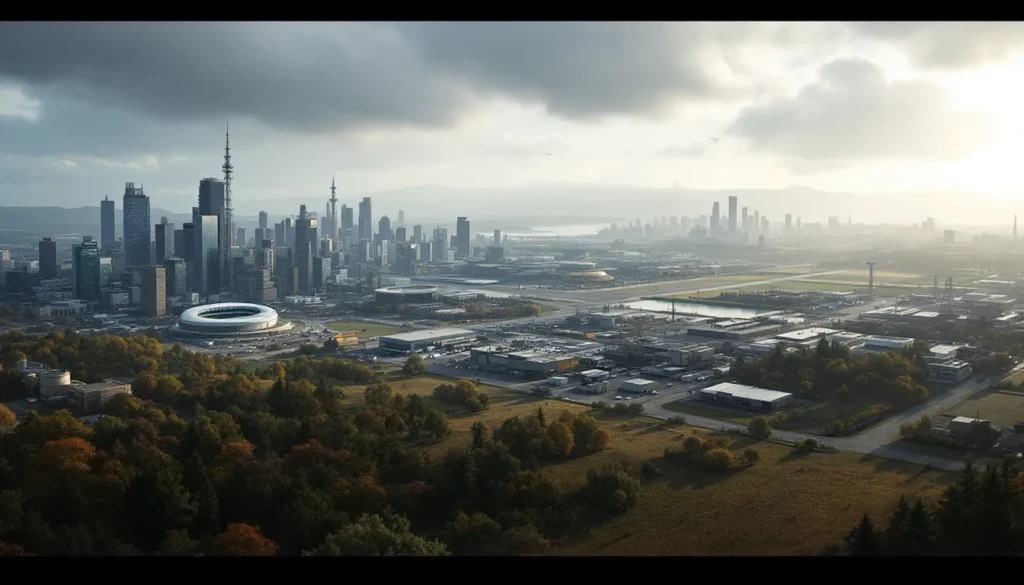
Verdansk wasn’t just a map, it was the map. For nearly two years, this fictional city carved from Kastovia became the proving ground for millions of players, hosting legendary firefights, jaw-dropping live events, and enough clutch plays to fill a highlight reel the size of the Gulag itself. From its March 2020 debut through its dramatic removal in December 2021, Verdansk defined what a battle royale map could be: sprawling yet intimate, chaotic yet tactical, and packed with enough landmarks to make every drop feel like a new story.
Even in 2026, long after Caldera, Al Mazrah, and Urzikstan have taken the spotlight, Verdansk remains the gold standard in the community’s collective memory. Whether you’re a veteran who remembers the original Stadium before it opened or a newer player curious about the hype, understanding Verdansk means understanding Warzone’s DNA. This guide breaks down everything, the map’s evolution across seasons, its most critical POIs, strategic drop zones, how it stacks up against successors, and whether we’ll ever see it again.
Key Takeaways
- The Warzone Verdansk map defined battle royale design by balancing urban chaos, tactical gameplay, and iconic landmarks across its two-year lifespan from March 2020 to December 2021.
- Verdansk’s evolution—from original launch through Verdansk ’84’s Cold War transformation—introduced dynamic live events like the nuke detonation, zombie outbreaks, and train heists that set it apart from other BR maps.
- Key POIs like Superstore, Downtown, Stadium, and Military Base created distinct playstyles: aggressive hot drops for combat-focused squads and safer zones like Lumber and Array for survival-oriented rotations.
- Verdansk’s strategic depth came from understanding mid-game rotations, controlling high ground, and anticipating circle pulls—skills that separated casual players from competitive esports-level competitors.
- Successors like Caldera, Al Mazrah, and Urzikstan haven’t replicated Verdansk’s balanced variety of urban density, industrial sprawl, and open terrain, cementing it as the gold standard in the community’s memory.
- Community demand for a Warzone Verdansk return remains strong four years later, with developers hinting at potential limited-time events or reimagined versions tied to future Call of Duty cycles.
The History and Evolution of Verdansk
Original Verdansk Launch and Early Seasons
When Verdansk launched on March 10, 2020, alongside Call of Duty: Warzone, it dropped 150 players into a 9km² map blending urban sprawl, industrial zones, and rural outskirts. Built on the bones of Modern Warfare 2019, the map recycled assets and design philosophy from the campaign’s Kastovia setting, giving it that grounded, quasi-realistic aesthetic that set it apart from Fortnite or Apex Legends.
Early seasons introduced incremental changes. Season 3 saw Stadium’s exterior remain sealed, teasing secrets inside. Season 4 added the iconic Train that circled the map’s perimeter, creating a mobile loot hotspot and rotating combat zone. Season 5 cracked Stadium wide open, revealing a multi-tiered interior perfect for close-quarters chaos. The meta during this era leaned heavily on Grau 5.56 and Bruen MK9 dominance, while esports tournaments on Dexerto documented the map’s evolving competitive landscape.
Bunkers scattered across Verdansk became obsession fuel. Players decoded keypad puzzles and hunted red access cards to unlock vaults stuffed with legendary loot. The mysterious Bunker 11 Easter egg, requiring specific phone activations in Russian, became a community-wide puzzle hunt.
Verdansk ’84: The Cold War Transformation
On April 22, 2021, following the nuclear detonation event that obliterated the original map, Verdansk ’84 emerged. This wasn’t a simple reskin, it was a temporal shift tied to Black Ops Cold War integration. The map retained its core layout but swapped modern aesthetics for 1980s styling: different building facades, period-appropriate vehicles, and altered interior spaces.
Key changes included a redesigned Summit replacing the boring old hilltops, a completely overhauled Downtown with better verticality, and a retro-fitted Airport with hangars that offered improved flow. The Dam received structural tweaks, and the Gulag shifted from the Showers to a new layout that better balanced sightlines.
Seasonally, Verdansk ’84 saw fewer dramatic transformations than its predecessor, focusing instead on weapon balance patches and the integration of Cold War armory. The game reached some of its highest player counts during this phase, though weapon meta discussions on Game8 show the Swiss K31 and OTs 9 began dominating by Season 4.
The Vault Event and Verdansk’s Removal
December 8, 2021 marked Verdansk’s final day. The “Operation: Vulcan” event didn’t feature the explosive spectacle of the nuke, instead, players experienced a more subdued in-game transition as Caldera preparation took center stage. Raven Software opted for a softer sendoff, perhaps recognizing that the community needed closure rather than fireworks.
The removal sparked immediate nostalgia. Forums flooded with clips, Twitter threads eulogized favorite drop spots, and content creators churned out retrospectives. Unlike most seasonal map rotations in other BRs, Verdansk’s departure felt permanent, and it has been, for over four years now.
Key Landmarks and Points of Interest
Downtown and High-Traffic Urban Zones
Downtown served as Verdansk’s beating heart, a dense cluster of skyscrapers, street-level shops, and underground parking that rewarded vertical gameplay and aggressive pushes. The ATC Tower (Air Traffic Control) offered 360-degree sightlines for sniper setups, while the surrounding high-rises created a three-dimensional battleground where teams could hold power positions or get third-partied from ten different angles.
The Hospital on Downtown’s edge was another meat grinder. Its multi-story layout, with narrow hallways and countless angles, made it a high-risk, high-reward drop. You’d either walk out stacked with purple loot or get sent to the Gulag within 30 seconds.
Boneyard and Promenade East rounded out the urban sprawl, offering mid-tier loot density with slightly less chaos than Downtown proper. These zones worked well for squads looking to gear up before rotating into hot zones.
Superstore and Stadium: Combat Hotspots
Superstore needs no introduction. This massive retail complex became Verdansk’s most infamous hot drop, pulling 20+ players every match. The interior’s long sightlines, abundant cover, and roof access created a blender of SMG duels, shotgun trades, and the occasional sniper picking off players exiting the building.
The loot quality justified the chaos, Superstore reliably spawned loadout money, multiple contracts, and enough floor loot to kit a full squad. But surviving the first two minutes required sharp game sense and even sharper aim.
Stadium, post-Season 5 opening, offered a similarly chaotic experience but with more verticality. The field level, concourse, and upper seating sections created distinct combat layers. The underground parking and secret access tunnels added tactical depth, though most squads treated it as a mad dash for loot before rotating out.
Both POIs exemplified Verdansk’s design philosophy: high-risk drops that could set your team up for victory or send you back to lobby before the first circle closed.
Military Base, Airport, and Dam
Military Base sat in Verdansk’s southeast corner, offering top-tier loot across multiple barracks, hangars, and the iconic control tower. The wide-open spaces between buildings made rotations dangerous, but squads who controlled the high ground could lock down approaches and farm kills.
Airport sprawled across the map’s western edge, featuring hangars, terminals, and a massive runway. In Verdansk ’84, the redesigned hangars improved flow and reduced the awkward dead zones that plagued the original version. The ATC tower here mirrored Downtown’s, providing long-range dominance if you could secure it.
Dam occupied the northern border, a multi-level concrete structure overlooking the reservoir. The interior tunnels and exterior catwalks created claustrophobic engagements, while the surrounding hills offered sniper nests. During certain circle rotations, teams would get pinned at Dam, leading to brutal choke-point fights as the gas closed in.
These POIs formed the map’s strategic backbone. Understanding rotation paths between them separated casual squads from competitive teams, and detailed breakdowns on Twinfinite helped players optimize loot routes.
Hidden Bunkers and Secret Locations
Verdansk’s bunker system added a layer of mystery and reward. Eleven numbered bunkers dotted the map, most requiring red access cards found in legendary loot crates. Inside, players found advanced UAVs, self-revives, gas masks, and loadout-quality weapons.
Bunker 11, the most famous, required a multi-step Easter egg: activate three phones in Russian language order, then access the bunker near Military Base to find the blueprint for the Mud Drauber MP7 skin. This community puzzle became a defining moment in Warzone’s early seasons.
Other secrets included hidden rooms beneath Stadium (accessed via keycards), the underground subway system connecting key POIs, and the Gulag-adjacent areas that clever players could exploit for positional advantages.
Strategic Drop Zones and Rotation Paths
Best Landing Spots for Aggressive Gameplay
Aggressive squads lived and died by their drop choices. Here’s where the kill-chasers went:
- Superstore: The obvious choice. Expect 15-25 players, immediate combat, and either a quick wipe or a hot loadout.
- Downtown ATC Tower: Land on the roof, grab a ground loot SMG, and hunt players landing at adjacent buildings. High risk, high kill potential.
- Stadium: Post-opening, this became the new Superstore for players seeking chaos with slightly better verticality.
- Hospital: Medium-hot drop with enough loot to support 2-3 squads fighting over it.
The key to aggressive drops wasn’t just landing first, it was securing a weapon within two seconds and immediately challenging. Hesitation meant death.
Safe Drop Zones for Looting and Survival
Not every squad wanted to flip coins in Superstore. Smart teams targeting top-10 placements favored:
- Lumber: Quiet, reliable loot, easy rotations south or east. Perfect for warming up.
- Boneyard: Decent loot density without the Superstore madness. Good for solos or duos.
- Quarry: Far southwest position kept you out of early game traffic. The stone quarry offered natural cover during looting.
- Array: The satellite dishes in the far northeast provided solid loot with minimal contest.
- Train Station (not the Train itself): The station buildings offered consistent loot, and you could ambush teams rotating through.
These spots let squads complete 2-3 contracts, grab loadouts, and position for mid-game without burning through armor plates and self-revives.
Optimal Mid-Game Rotations and Circle Movement
Verdansk’s mid-game separated good players from great ones. Key rotation principles included:
1. Anticipate circle pull based on current position
If the first circle pulled northeast and you landed southwest, you couldn’t afford to loot past the 3:00 mark. Teams who overstayed got caught in no-man’s land with the gas pushing and squads holding power positions ahead.
2. Control high ground and natural choke points
Hill positions between POIs, especially around Prison, Quarry, and the ridges above Boneyard, let you spot rotating teams early. The saying “rotate early, rotate high” became gospel.
3. Use vehicles strategically, not carelessly
Vehicles solved rotation problems but painted targets on your squad. Experienced teams drove to the edge of the next zone, ditched the vehicle, and approached final positions on foot.
4. Identify final-circle terrain
Open field finales favored snipers and gas-play. Urban finales rewarded aggressive pushes and building control. Reading terrain early let you position accordingly, and understanding circle mechanics improved win rates significantly.
The difference between a squad finishing 15th and top-5 often came down to one rotation mistake, pushing a contested building instead of flanking, or staying in the open a second too long.
Verdansk vs. Modern Warzone Maps
How Verdansk Compares to Caldera
Caldera arrived in December 2021 as Verdansk’s replacement, trading urban warfare for a volcanic Pacific island. The shift was jarring. Where Verdansk offered varied terrain, city streets, industrial zones, rural areas, Caldera leaned heavily into jungle foliage, hills, and wide-open sightlines.
The community reception was… mixed, to put it diplomatically. Caldera’s launch glitches didn’t help, but the core issue was design philosophy. Caldera’s heavy vegetation made spotting enemies frustrating, the lack of urban POIs removed Verdansk’s signature close-quarters flow, and excessive verticality (Peak, Arsenal) created too many angles to monitor.
Verdansk’s strength was balance, you could play aggressive in Downtown, tactical in the hills, or rotate strategically through mid-tier POIs. Caldera forced specific playstyles depending on terrain, and many felt it lacked identity.
Verdansk vs. Al Mazrah and Urzikstan
Al Mazrah, launching with Warzone 2.0 in November 2022, took design cues from Verdansk while incorporating lessons from Caldera’s missteps. The map featured urban centers (Taraq Village, Sa’id City), industrial zones, and open desert, echoing Verdansk’s variety. The POI design felt tighter, more intentional, though some argued it played too safely, nothing matched Superstore’s chaos or Downtown’s verticality.
Urzikstan, which arrived in December 2023 as Al Mazrah’s successor, pushed scale even further. At roughly 50% larger than Verdansk, it offered sprawling combat spaces but sometimes felt too big for 100-player lobbies. The urban sections attempted to recapture Verdansk’s magic, but the map’s sheer size diluted player density.
Both maps are competent, well-designed battlegrounds. But neither captured Verdansk’s lightning-in-a-bottle combination of scale, pacing, and iconic POIs. When discussing what players expected from new maps, Verdansk remained the benchmark.
Why Players Still Miss Verdansk in 2026
Four-plus years removed, the nostalgia is real, but it’s not just rose-tinted glasses. Verdansk worked because:
Familiarity bred mastery: After hundreds of hours, players knew every rooftop, every rotation, every angle. That deep knowledge created a skill ceiling newer maps haven’t matched yet.
Balanced variety: No other map has replicated Verdansk’s mix of urban density, industrial sprawl, and open terrain in such a cohesive package.
Cultural moment: Verdansk launched during COVID-19 lockdowns, becoming a social space as much as a game. That timing amplified its impact.
Iconic events: The nuke, the Stadium opening, Zombie outbreaks, Verdansk hosted live events that felt genuinely special.
Players don’t just miss the map. They miss the era it represented: Warzone at its peak, before integration issues, before weapon balancing controversies, before the franchise fragmented across multiple titles. Verdansk symbolizes when Warzone felt fresh, unified, and unstoppable.
Memorable Moments and Community Legacy
Iconic Updates and Live Events on Verdansk
Verdansk didn’t just evolve, it performed. Raven Software and Infinity Ward staged several unforgettable live events that rewarded players for logging in at specific times:
The Nuke Event (April 2021): The transition from original Verdansk to Verdansk ’84 featured a tactical nuke detonation. Players watched the warhead impact, the map crumble, and then experienced a cutscene sequence leading into the 1980s version. It was ambitious, buggy, and absolutely memorable.
Zombie Outbreak (Season 2): Verdansk’s southern region became infested with zombies, forcing players to fight both AI enemies and opposing squads. The event teased the upcoming Black Ops Cold War integration while adding PvE chaos to the BR formula.
Train Heist: The armored train circling the map’s perimeter became a rolling objective, requiring teams to board, clear, and loot it while other squads tried the same. It created emergent gameplay moments, train hijackings mid-rotation, sniper ambushes, desperate escapes.
Stadium and Bunker Easter Eggs: These weren’t time-limited events but community-driven mysteries that sparked collaboration, theory-crafting, and guide content across YouTube and Reddit. The Bunker 11 puzzle alone generated millions of views.
These moments gave Verdansk a narrative weight most BR maps never achieve. The map felt alive, evolving, consequential.
Professional Esports Tournaments and Highlights
Verdansk hosted countless competitive tournaments, from Activision’s official Call of Duty League events to third-party invitationals. The map’s design supported competitive play better than successors, balanced POIs, predictable rotations, and enough variety to prevent stale metas.
Highlights include the Warzone Wednesday series featuring content creators and pros, the Twitch Rivals tournaments that showcased aggressive playstyles, and various charity events that turned into must-watch content. Players like Aydan, HusKerrs, and SuperEvan built their reputations on Verdansk gameplay, mastering its nuances in ways that defined what high-level Warzone looked like.
The DMZ mode that arrived later took lessons from Verdansk’s design philosophy, emphasizing emergent gameplay in a persistent map environment. But the competitive purity of battle royale Verdansk remains the measuring stick.
Will Verdansk Ever Return?
Community Demand and Developer Hints
The calls for Verdansk’s return started approximately three weeks after Caldera launched. By 2023, “Bring Back Verdansk” had become a rallying cry across Reddit, Twitter, and YouTube comments. Petitions circulated. Streamers made dedicated videos. The demand was undeniable.
Activision and Raven Software have dropped occasional hints but nothing concrete. In a 2023 interview, a developer mentioned “never say never” about legacy map rotations. Call of Duty: Modern Warfare III (2023) included a remastered multiplayer version of Terminal, proving the studio wasn’t afraid of nostalgia plays. But committing resources to fully remaster Verdansk for modern Warzone, with its updated engine, movement mechanics, and weapon balance, would be a massive undertaking.
Data mining communities have occasionally uncovered Verdansk-related file references in updates, sparking speculation. None have materialized into official announcements, though discussions about Warzone 2 map developments keep the possibility alive in fan conversations.
Potential Remasters and Future Possibilities
If Verdansk returns, here’s what it might look like:
Limited-Time Mode (LTM): The most realistic option. Activision could bring back Verdansk for a 2-4 week event, capitalizing on nostalgia without committing to permanent support. This worked for Apex Legends with Kings Canyon rotations.
Ranked/Competitive Map: Position Verdansk as the “serious” competitive map while keeping newer maps for casual play. This would acknowledge its superior design for high-level play.
Resurgence Version: Scale down Verdansk to Rebirth Island size, keeping iconic POIs but condensing the footprint. This could work as a permanent addition to the Resurgence playlist.
Full Remaster in Next-Gen Warzone: When Activision eventually soft-reboots Warzone again (likely tied to the next Black Ops or Modern Warfare cycle), Verdansk could return as a launch map, fully rebuilt for new tech.
The technical challenges are real. Verdansk was built for Modern Warfare 2019‘s engine. Porting it to Warzone 2.0‘s IW 9.0 engine would require extensive rework, collision meshes, lighting, optimization, and ensuring compatibility with current movement mechanics like dolphin diving and tactical sprint.
But the business case is obvious. A Verdansk return would generate headlines, drive player re-engagement, and sell battle passes. In an industry obsessed with live-service retention metrics, that’s hard to ignore.
The question isn’t whether Verdansk should return. It’s when Activision decides the timing is right to play that ace.
Conclusion
Verdansk’s legacy isn’t just about nostalgia, it’s about a map that got the fundamentals right when the battle royale genre was still figuring itself out. It balanced aggression and strategy, rewarded game knowledge without punishing newcomers, and hosted enough memorable moments to cement itself in gaming history. Whether you’re a veteran who remembers every bunker code or someone who started with Al Mazrah and wants to understand what the fuss is about, Verdansk represents the blueprint that every Warzone map since has been measured against.
The odds of a full return remain uncertain. But as long as players keep dropping into Warzone, whether on Urzikstan, the next seasonal map, or whatever comes next, Verdansk’s DNA will be there, informing design decisions and reminding developers what made Warzone special in the first place. Until that day when the plane flies over Superstore again, we’ve got the memories, the clips, and the knowledge that we were there when battle royale peaked.
About The Author